This report published on Saturday, March 7, 2026 4:47:46 PM PST
This report is the exclusive property of this inspection company and the client(s) listed in the report title. Use of this report by any unauthorized persons is prohibited.
Concerns are shown and sorted according to these types:
Safety
Poses a safety hazard
Major Defect
Correction likely involves a significant expense
Repair/Replace
Recommend repairing or replacing
Repair/Maintain
Recommend repair and/or maintenance
Minor Defect
Correction likely involves only a minor expense
Maintain
Recommend ongoing maintenance
Evaluate
Recommend evaluation by a specialist
Monitor
Recommend monitoring in the future
Comment
For your information
General Information
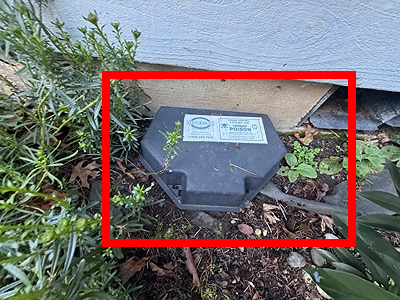
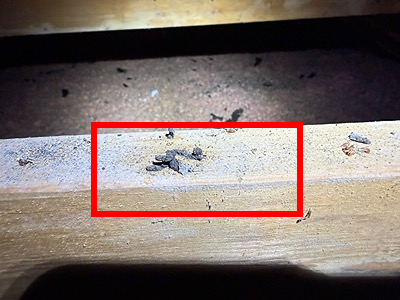
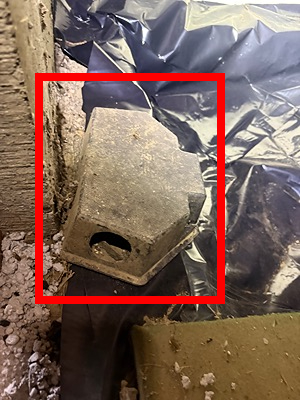
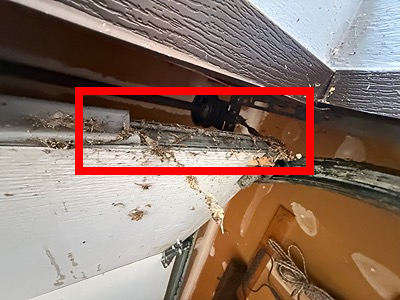
1) Evidence of rodent infestation was found in the form of feces and/or traps in the attic and/or crawl space. Consult with the property owner about this. A qualified person should make repairs to seal openings in the structure, set traps, and clean rodent waste as necessary. Recommend following guidelines in these Center for Disease Control articles: https://www.reporthost.com/?SEALUP https://www.reporthost.com/?TRAPUP https://www.reporthost.com/?CLEANUP
Photo 1-1 Photo 1-2
Photo 1-3 Photo 1-4
Photo 1-5 Photo 1-6
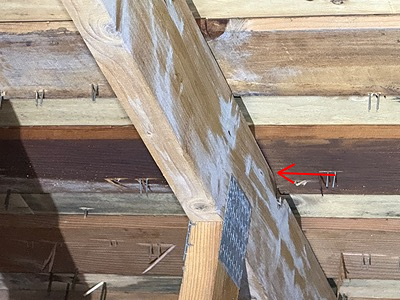
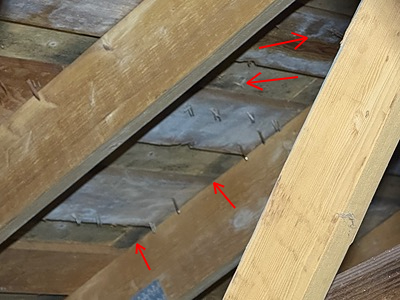
2) Microbial growths were found at one or more locations in the attic. It is beyond the scope of this inspection to identify what substance or organism this staining is. However such staining is normally caused by excessively moist conditions, which in turn can be caused by plumbing or building envelope leaks and/or substandard ventilation. These conducive conditions should be corrected before making any attempts to remove or correct the staining. Normally affected materials such as drywall are removed, enclosed affected spaces are allowed to dry thoroughly, a mildewcide may be applied, and only then is drywall reinstalled. For evaluation and possible mitigation, consult with a qualified industrial hygienist or mold/moisture mitigation specialist. For more information, visit: https://www.reporthost.com/?MOLDCDC https://www.reporthost.com/?MOLDEPA
Photo 2-1 Photo 2-2
Photo 2-3 Photo 2-4
Grounds
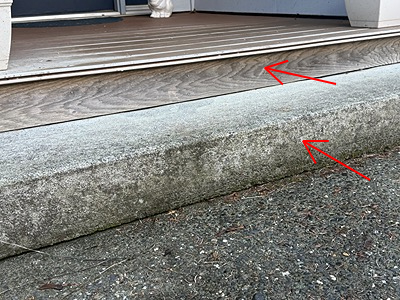
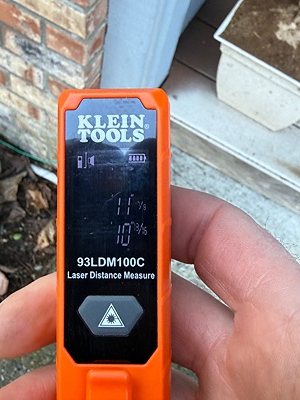
4) The risers for stairs at one or more locations varied in height and pose a fall or trip hazard. Risers within the same flight of stairs should vary by no more than 3/8 inch. At a minimum, be aware of this hazard, especially when guests who are not familiar with the stairs are present. Recommend that a qualified contractor repair per standard building practices.
Photo 4-1 Almost a 1" difference between the 1st riser and the 2nd riser Photo 4-2 Almost a 1" difference between the 1st riser and the 2nd riser
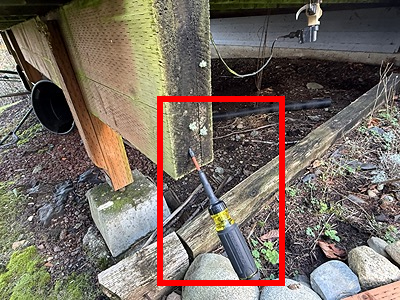
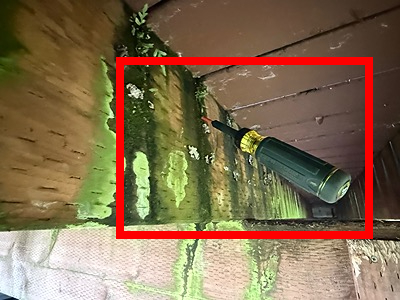
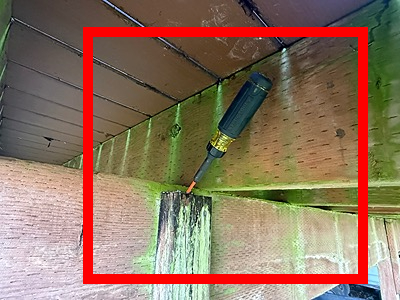
5) Fungal rot was found in joists and/or beams at one or more decks or porches. Recommend that a qualified contractor evaluate and repair as necessary. All rotten wood should be replaced.
Photo 5-1 Very minor rot forming Photo 5-2
Photo 5-3
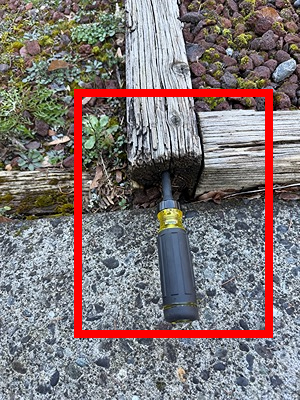
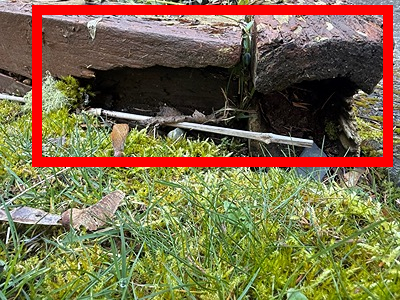
6) One or more landscaping timbers were rotten or damaged by wood-destroying insects or wood-destroying organisms. Recommend that a qualified person replace as necessary or removed them if not needed.
Photo 6-1 Photo 6-2
7) Fungal rot or damage from wood-destroying insects was found at one or more wooden planter boxes. Recommend that a qualified person remove, repair or replace planter boxes as necessary. All rotten or insect-damaged wood should be replaced or removed.
Exterior and Foundation
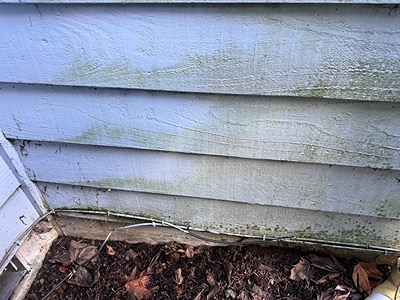
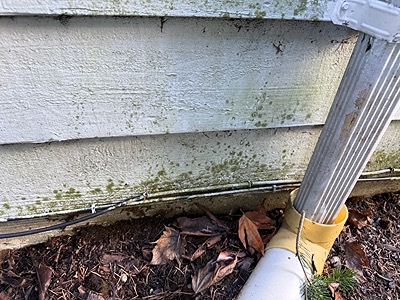
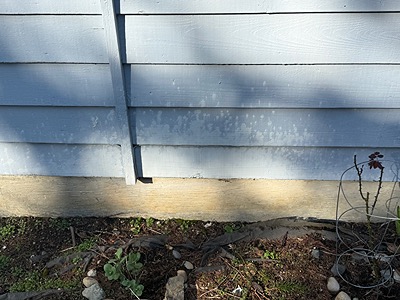
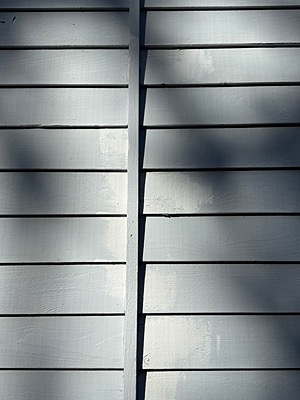
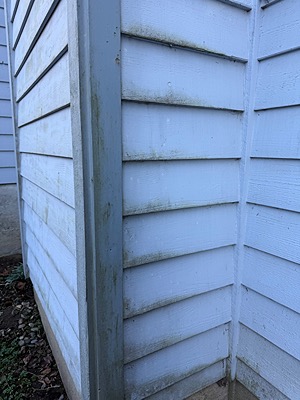
14) Fungal rot was found at one or more sections of siding or trim and/or gable ends. Conducive conditions for rot should be corrected (e.g. wood-soil contact, reverse perimeter slope). Recommend that a qualified contractor repair as necessary. All rotten wood should be replaced.
Photo 14-1 Photo 14-2
Photo 14-3 Photo 14-4
15) This property was clad with composition wood-fiber siding. Various manufacturers (e.g. Louisiana Pacific, Weyerhaeuser and Masonite) have produced this type of siding, which is made from oriented strand board (OSB) or "hardboard." It is prone to deteriorate and/or fail prematurely due to moisture penetration, especially when the paint coating is substandard or has not been maintained. Failure is typically visible in the form of swelling, cracking, buckling, wafer pops, delamination and fungal growth.
Some areas of siding on this structure showed symptoms described above and need replacement and/or maintenance. Some manufacturers (e.g. Louisiana Pacific) recommend a repair process for this siding where affected areas are sealed with Permanizer Plus, a flexible primer made by Pittsburgh Paint, followed by two coats of 100% acrylic latex paint. This sealant must be applied to the bottom edges using a brush. The face of the siding can be sprayed. The Permanizer Plus sealer isn't required for edges that aren't swollen, cracked or deteriorated, but the acrylic latex should still be brushed on these edges.
Recommend that a qualified contractor evaluate and replace siding as necessary, and/or seal and repaint as necessary. Repairs should be made per the siding and/or sealant manufacturer's installation instructions, and per standard building practices.
16) One or more windows or doors were installed with no "drip cap" or "Z" flashings installed above them. Better building practices call for such flashings, which greatly reduce the chance of leaks above windows and doors. Without this flashing, caulk and paint must be maintained or water can enter the wall structure and cause rot and possible structural damage. Depending on the exposure (e.g. roof overhang, height of exterior wall, direction of prevailing rain) this may or may not be an issue. The client should monitor these areas in the future and maintain caulk and paint as necessary. Consult with a qualified contractor about installing flashings where needed, and per standard building practices. Note that when trim or siding is removed to install flashing, damaged wood may be found and additional repairs may be needed.
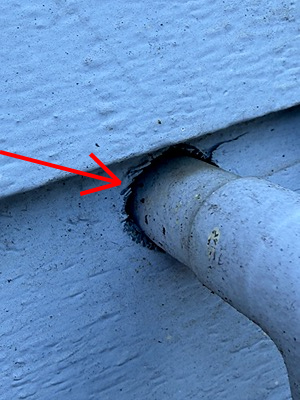
17) One or more holes or gaps were found in siding or trim. Vermin, insects or water may enter the structure. Recommend that a qualified person repair as necessary.
Photo 17-1
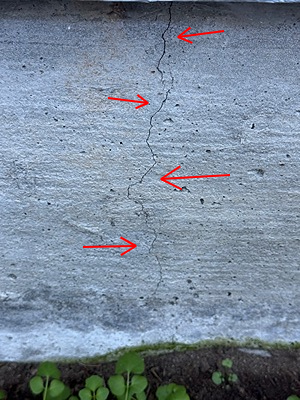
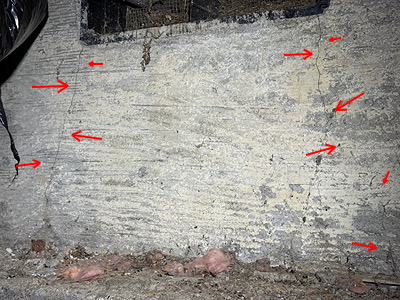
18) One or more minor cracks (1/8 inch or less) were found in the foundation. These didn't appear to be a structural concern, but recommend sealing them to prevent water infiltration and monitor them in the future. Numerous products exist to seal such cracks including hydraulic cement, non-shrinking grout, resilient caulks and epoxy sealants.
Photo 18-1 Photo 18-2
Crawl Space
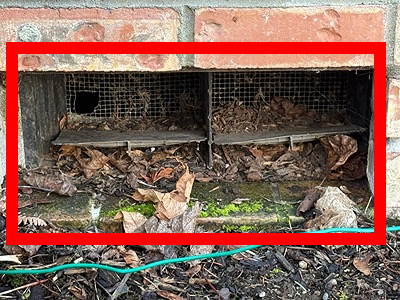
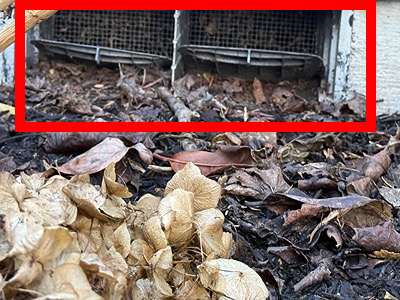
24) One or more crawl space vents were blocked by soil and/or debris. This restricts ventilation in the crawl space and can result in increased levels of moisture inside. This is a conducive condition for wood-destroying organisms. Materials or items blocking vents should be removed as necessary.
Photo 24-1 Photo 24-2
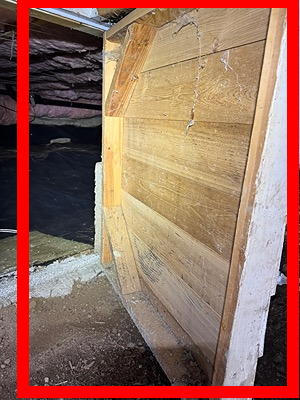
25) One or more indoor crawl space access hatches or doors were not insulated, or had substandard insulation. Recommend installing insulation as necessary and per current standards at hatches or doors for better energy efficiency.
Photo 25-1
Roof
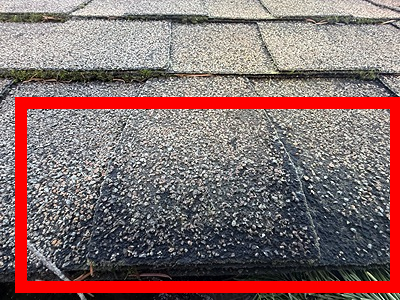
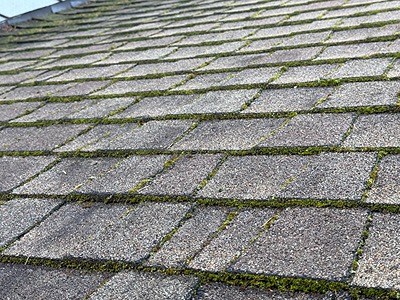
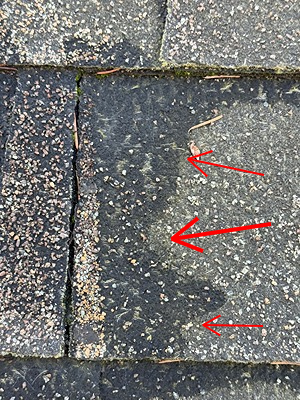
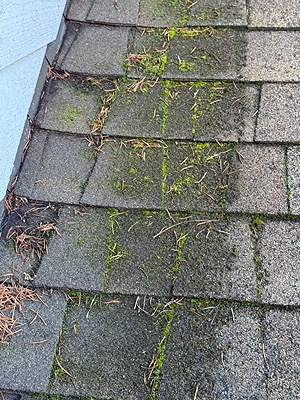
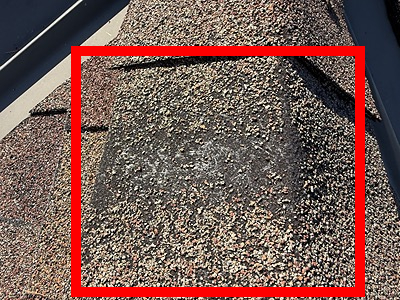
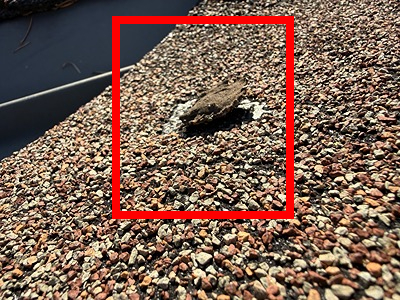
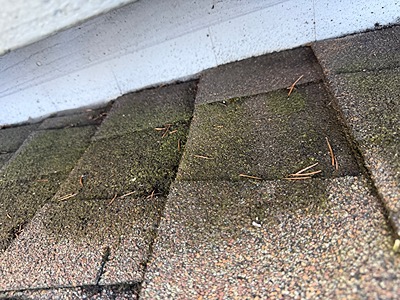
26) The roof surface was significantly deteriorated and appeared to be at or beyond its service life. It needs replacing now. This is a conducive condition for wood-destroying organisms. Consult with a qualified contractor to determine replacement options. Note that some structural repairs are often needed after old roof surfaces are removed and the structure becomes fully visible. Related roofing components such as flashings and vents should be replaced or installed as needed and per standard building practices.
Photo 26-1 Photo 26-2
Photo 26-3 Photo 26-4
Photo 26-5 Photo 26-6
Photo 26-7 Photo 26-8
Photo 26-9
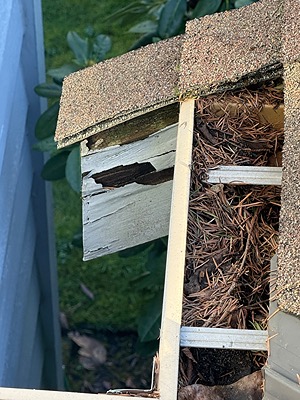
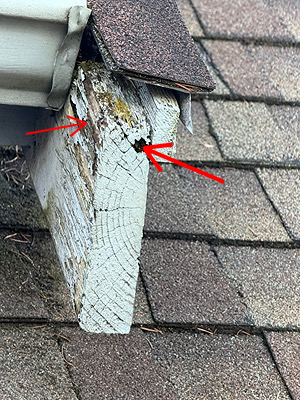
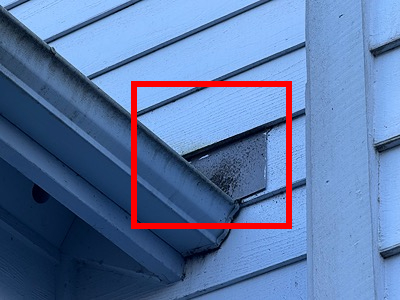
27) Barge boards, which are the trim boards at gable ends of roofs, were exposed at their lower ends, and were rotten. Standard building practices call for shingles or flashing to be installed over them to prevent rot. Recommend that a qualified contractor replace rotten boards and install shingles or flashing over exposed barge board ends where missing.
Photo 27-1 Photo 27-2
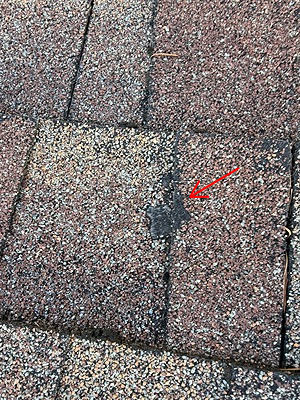
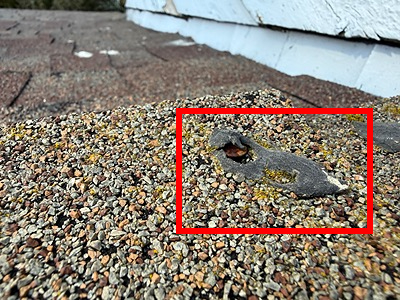
28) Many composition shingles were damaged. Leaks can occur as a result. This is a conducive condition for wood-destroying organisms. Recommend that a qualified contractor repair as necessary. For example, by replacing shingles.
Photo 28-1 Photo 28-2
Photo 28-3 Photo 28-4
Photo 28-5 Photo 28-6
Photo 28-7
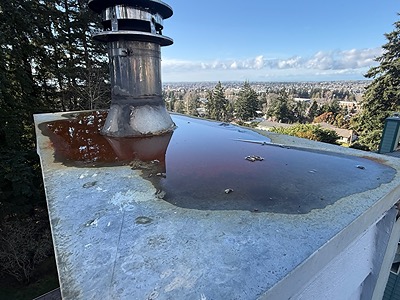
29) Kick-out flashing was missing at one or more locations. Such flashing should be located at the bottom of slopes where roof surfaces intersect with exterior walls above. It directs rainwater away from exterior walls and into gutters so that rainwater is less likely to run down the front surfaces of siding or flow behind siding. Recommend that a qualified contractor install kickout flashings where missing and per standard building practices.
Photo 29-1
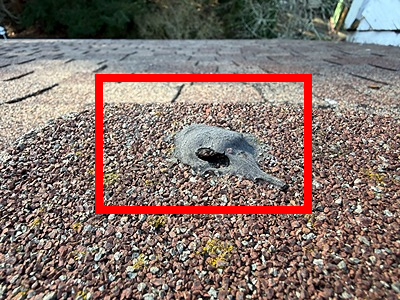
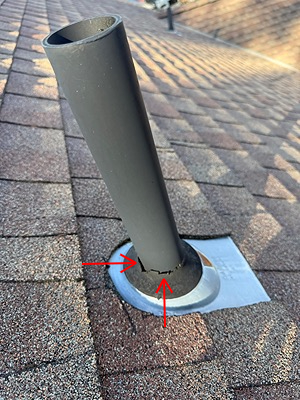
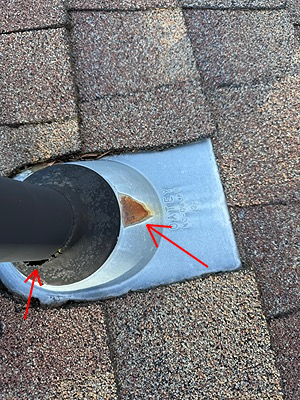
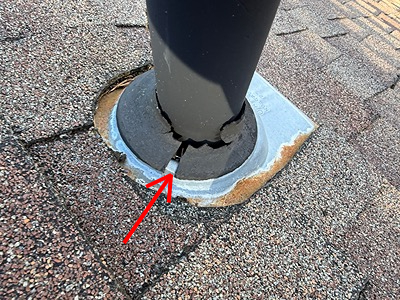
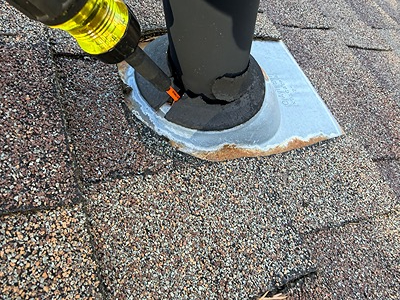
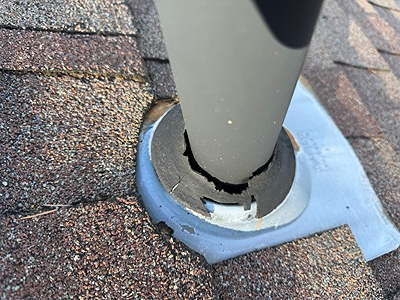
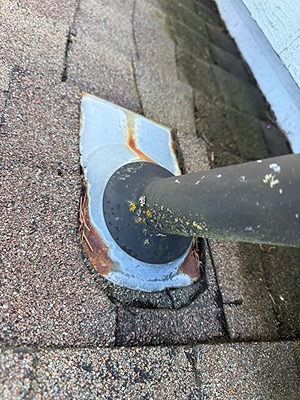
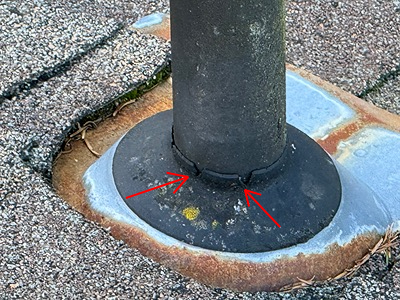
30) One or more rubber or neoprene pipe flashings were split or cracked. Leaks can occur as a result. This is a conducive condition for wood-destroying organisms. Recommend that a qualified contractor replace flashings where necessary.
Photo 30-1 Photo 30-2
Photo 30-3 Photo 30-4
Photo 30-5 Photo 30-6
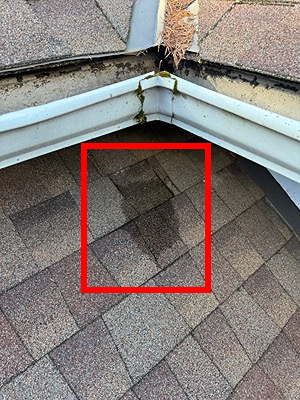
31) One or more downspouts terminated above a roof surface, and rainwater has damaged shingles on the roof surface below. This is a conducive condition for wood-destroying organisms. Downspout installations like this are common, but damage from concentrated rainwater run-off can reduce the life of the roof surface. Recommend that a qualified contractor replace damaged shingles as necessary. Recommend that a qualified person install downspout extensions where necessary to route the rainwater directly to the closest gutter below.
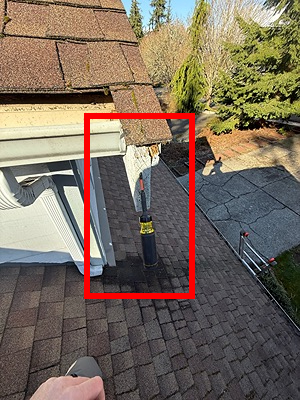
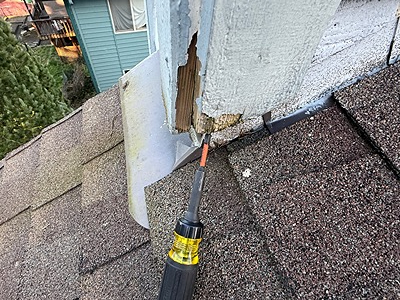
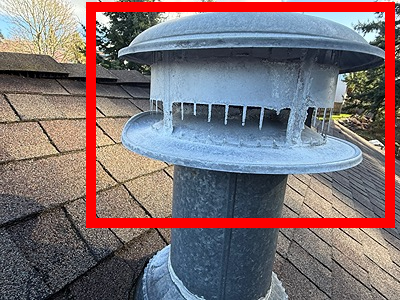
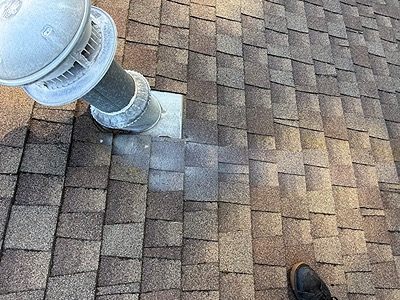
32) One or more roof-top appurtenances such as vents, sheet metal on chimney structures, masts, pipes, etc. were significantly corroded. Metal may deteriorate to the point of needing replacement. Leaks can occur around such items if flashing or sealant doesn't form a waterproof seal with the corroded metal. This can be a conducive condition for wood-destroying organisms. Recommend that a qualified person repair as necessary. For example, by cleaning rust and repainting with a rust-inhibiting paint.
Photo 32-1 Photo 32-2
Photo 32-3
33) One or more roofing nails or staples were loose, resulting in holes in shingles, loose shingles or lifting shingles. Leaks may occur and can be a conducive condition for wood-destroying organisms. Recommend that a qualified contractor repair as necessary.
Photo 33-1 Photo 33-2
Photo 33-3
34) One or more gutters were leaking. Rainwater may come in contact with the building exterior or accumulate around the foundation as a result. This is a conducive condition for wood-destroying organisms. Recommend that a qualified person repair as necessary.
Photo 34-1
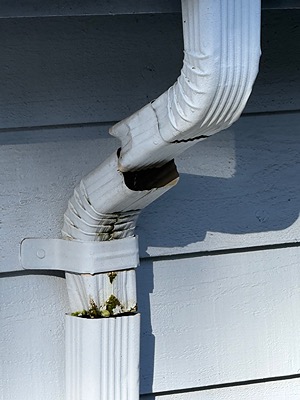
35) One or more downspouts or elbows were loose or detached. Rainwater can come in contact with the building exterior or accumulate around the foundation as a result. This is a conducive condition for wood-destroying organisms. Recommend that a qualified person repair as necessary.
Photo 35-1
Attic and Roof Structure
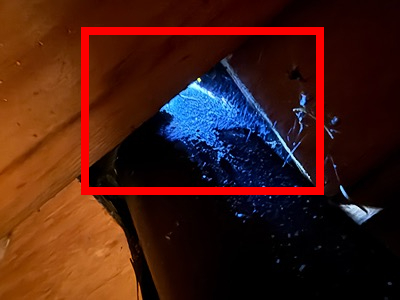
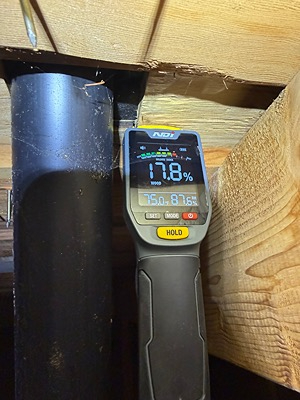
38) The roof structure in the attic was wet, and/or dripping water was found at one or more locations. There appeared to be one or more active leaks in the roof. Recommend that a qualified contractor evaluate and repair as necessary.
Photo 38-1 Daylight is shown from inside attic, looking up the plumbing vent pipe. Photo 38-2 Daylight is shown from inside attic, looking up the plumbing vent pipe.
Photo 38-3 Higher moisture readings where Plumbing boot has failed and allowed water intrusion into the attic.
Garage or Carport
41) The door between the garage and the house did not appear to be fire resistant, or the inspector was unable to verify that it was via a label. This is a potential safety hazard. House to garage doors, to prevent fire and fumes from spreading from the garage into interior living space, should be constructed of fire-resistant materials. Doors, generally considered to be suitable for the purpose, are solid core wood, steel, honeycomb steel or a door that has been factory labeled as fire rated. Recommend that a qualified contractor replace or repair the door and, at that time, make any other corrections that might be required to provide suitable fire resistance between the garage and the dwelling per standard building practices. For more information, visit: https://www.reporthost.com/?AGFR
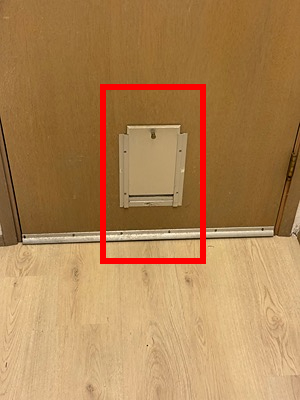
42) The door between the garage and the house has been modified with a pet door, and is no longer fire-resistant. This is a potential safety hazard. House to garage doors, to prevent fire and fumes from spreading from the garage into interior living space, should be constructed of fire-resistant materials. Doors, generally considered to be suitable for the purpose, are solid core wood, steel, honeycomb steel or a door that has been factory labeled as fire rated. Recommend that a qualified contractor replace or repair the door and, at that time, make any other corrections that might be required to provide suitable fire resistance between the garage and the dwelling per standard building practices. For more information, visit: https://www.reporthost.com/?AGFR
Photo 42-1
43) Substandard shelving was installed. This is a potential safety hazard due to the risk of collapse, especially if heavy items are stored on the shelves. Recommend that a qualified person remove shelving, or repair or modify as necessary.
44) Weatherstripping sealing one or more garage vehicle doors was deteriorated. Recommend replacing or installing weatherstripping where necessary to prevent water and/or vermin intrusion.
Photo 44-1
Electric
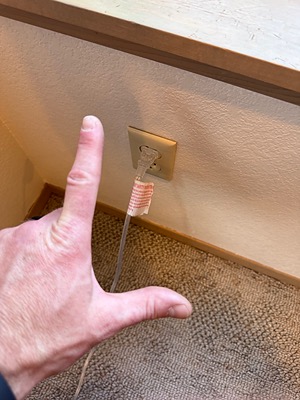
46) One or more electric receptacles and/or the boxes in which they were installed were loose and/or not securely anchored. Wire conductors can be damaged due to repeated movement and/or tension on wires, or insulation can be damaged. This is a shock and fire hazard. Recommend that a qualified electrician repair as necessary.
Photo 46-1 Photo 46-2
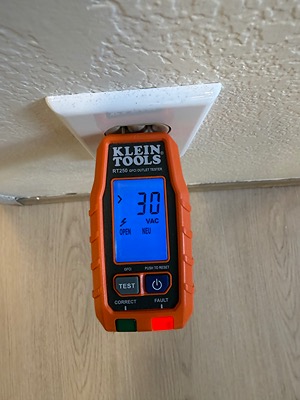
47) One or more electric receptacles were incorrectly wired with an open neutral. Recommend that a qualified electrician repair as necessary.
Photo 47-1
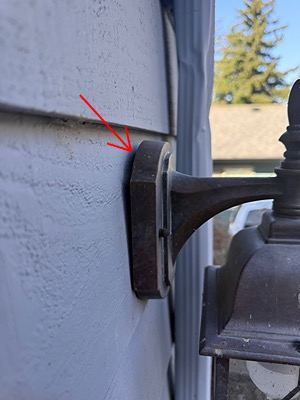
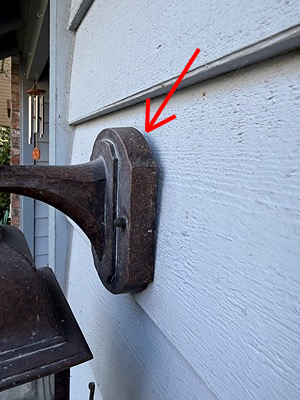
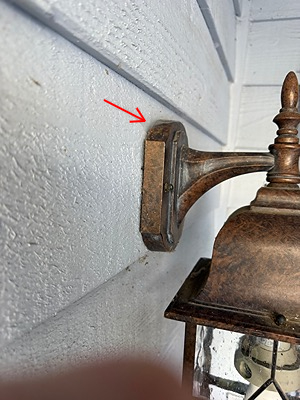
48) One or more wall-mounted exterior light fixtures had no caulk installed above the back plate. Water can enter the space behind the back plate and contact wiring. This is a potential shock hazard. Recommend that a qualified person apply caulk above and around the back plate per standard building practices. A gap should be left at the bottom of the plate so that condensation can drain out.
Photo 48-1 Photo 48-2
Photo 48-3
49) Based on the age of this structure and the appearance of existing smoke alarms, the alarms may have been installed more than 10 years ago. According to National Fire Protection Association, aging smoke alarms don't operate as efficiently and often are the source for nuisance alarms. Older smoke alarms are estimated to have a 30% probability of failure within the first 10 years. Newer smoke alarms do better, but should be replaced after 10 years. Unless you know that the smoke alarms are new, replacing them when moving into a new residence is also recommended by NFPA. For more information, visit: https://www.reporthost.com/?SMKALRMLS
50) Carbon monoxide alarms were missing from one or more sleeping areas and/or on one or more levels. This is a potential safety hazard. Some states and/or municipalities require CO alarms to be installed in the vicinity of each sleeping area, on each level and in accordance with the manufacturer's recommendations. Recommend installing additional carbon monoxide alarms per these standards. For more information, visit: https://www.reporthost.com/?COALRM
51) One or more "plug-in" type carbon monoxide alarms were found. Because such CO alarms can be easily removed, recommend that home buyers verify that CO alarms haven't been removed upon taking occupancy. If removed, then recommend installing new CO alarms in the vicinity of sleeping areas and on each level. Note that some states and/or municipalities require CO alarms to be installed for new construction and/or for homes being sold. For more information, visit: https://www.reporthost.com/?COALRM
Photo 51-1
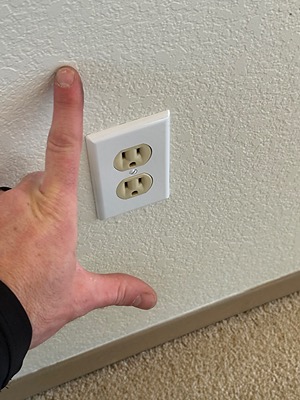
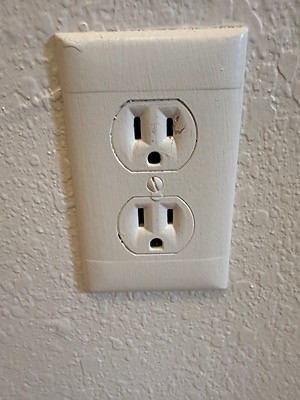
52) One or more receptacles have been painted, and slots were clogged with paint. Recommend that a qualified electrician replace such receptacles as necessary.
Photo 52-1
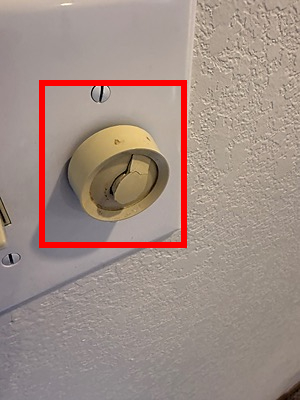
53) One or more wall switches were broken or damaged. Recommend that a qualified electrician replace wall switches as necessary.
Photo 53-1
Plumbing / Fuel Systems
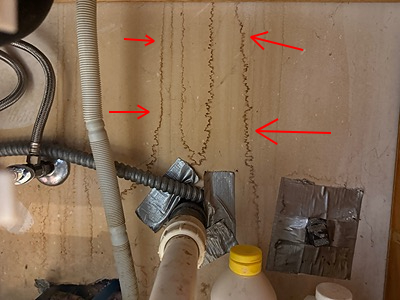
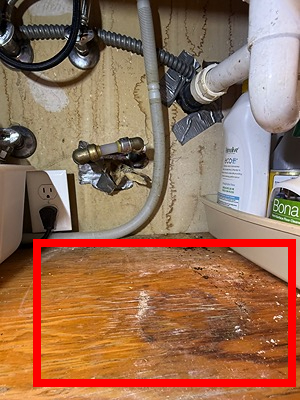
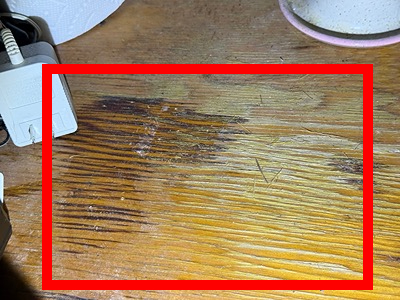
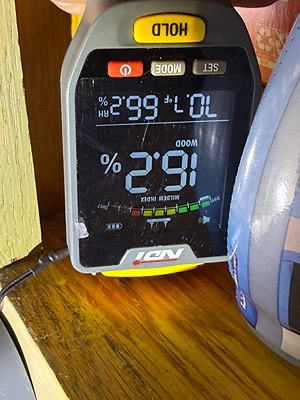
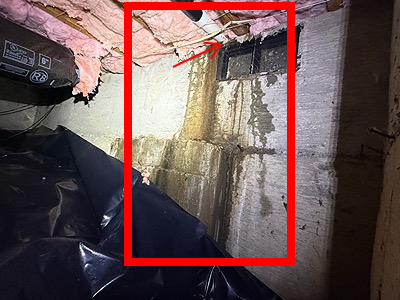
54) Stains were found in one or more sections of drain lines, but no active leaks were found near the stains. This may indicate that past leaks have occurred. Consult with the property owner about this, and either monitor these areas in the future for leaks or have a qualified plumber evaluate and repair as necessary.
Photo 54-1 Photo 54-2
Photo 54-3 Photo 54-4
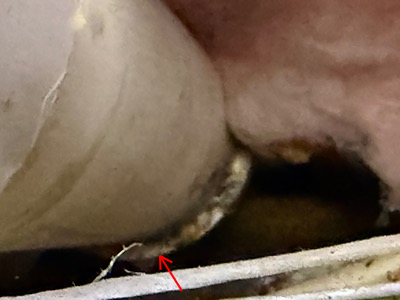
55) One or more leaks were found in drain pipes or fittings. A qualified plumber should evaluate and repair as necessary.
Photo 55-1 Photo 55-2
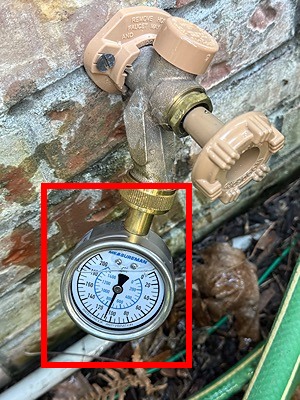
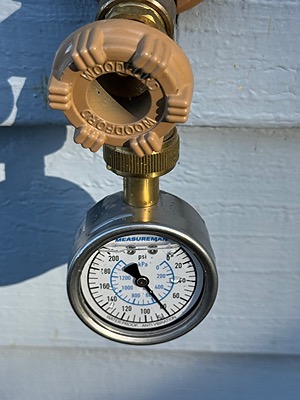
56) The water supply pressure was greater than 80 pounds per square inch (PSI). Pressures above 80 PSI may void warranties for some appliances such as water heaters or washing machines. Flexible supply lines to washing machines are likely to burst with higher pressures. 40-80 PSI is considered the normal range for water pressure in a home, and most plumbers recommend 50-60 PSI . Typically, the pressure cannot be regulated at the water meter. Recommend that a qualified plumber evaluate and make modifications to reduce the pressure to below 80 PSI . Installing a pressure reducing valve on the main service pipe is a common solution to this problem. If one exists, then it should be adjusted, repaired or replaced as necessary to maintain lower pressures. Note that installing a pressure reducing valve creates a "closed system," which may require installing an expansion tank at the water heater if one is not already installed.
Photo 56-1 Photo 56-2
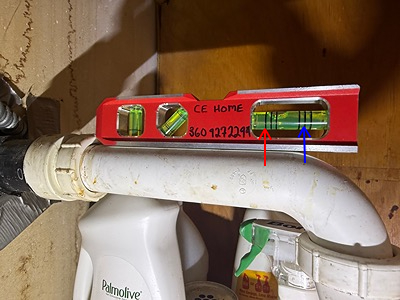
57) One or more drain pipes had a substandard slope. Clogging or leaks can occur as a result. Drain and waste pipes should be sloped 1/4 inch per foot of length if less than 3 inches in diameter, or 1/8 inch per foot of length for larger diameters. Recommend that a qualified plumber repair per standard building practices.
Photo 57-1 Red arrows shows where current grade is at +2%, Blue arrow indicates where -1% grade (minimum) mark is. 1%-2% is the Standard Practice
Water Heater
59) The temperature-pressure relief valve drain line had more than 4 elbows. This is a potential safety hazard due to the risk of explosion from restricted flow. A qualified plumber should repair per standard building practices. For more information, visit: https://www.reporthost.com/?TPRVALVE
60) The temperature-pressure relief valve drain line terminated too high above the ground outside. Someone standing next to the drain line could be scalded if the valve opens. Recommend that a qualified person repair per standard building practices. For example by extending the drain line. For more information, visit: https://www.reporthost.com/?TPRVALVE
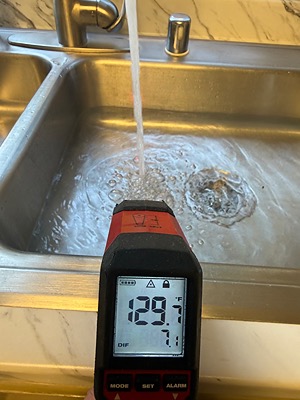
61) The hot water temperature was greater than 120 degrees Fahrenheit. This is a safety hazard due to the risk of scalding. The thermostat should be adjusted so the water temperature doesn't exceed 120 degrees. If the water heater is powered by electricity, a qualified person should perform the adjustment, since covers that expose energized equipment normally need to be removed. For more information on scalding dangers, visit: https://www.reporthost.com/?SCALD
Photo 61-1
Heating, Ventilation and Air Condition (HVAC)
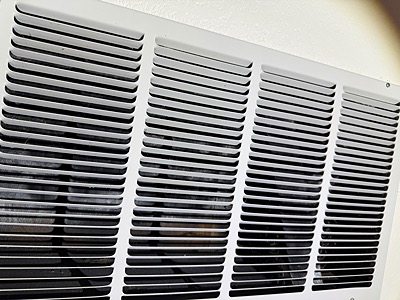
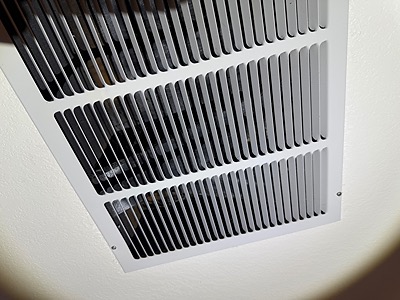
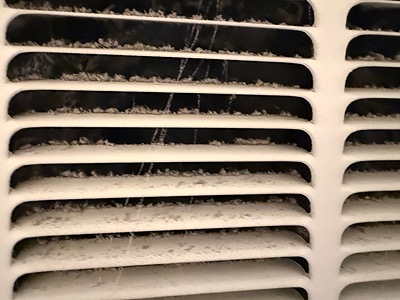
63) Significant amounts of debris, dirt and/or dust were visible in one or more sections of supply and/or return air ducts for the heating or cooling system. This can be a health hazard, especially for those with allergies or respiratory problems. The Environmental Protection Agency (EPA) recommends considering having ducts professionally cleaned when "ducts are clogged with excessive amounts of dust and debris and/or particles are actually released into the home from your supply registers." At a minimum, the visible debris should be thoroughly cleaned. Recommend that a qualified contractor clean the ducts. For more information on duct cleaning in relation to indoor air quality, visit: https://www.reporthost.com/?DUCTCLEAN
Photo 63-1 Photo 63-2
Photo 63-3 Photo 63-4
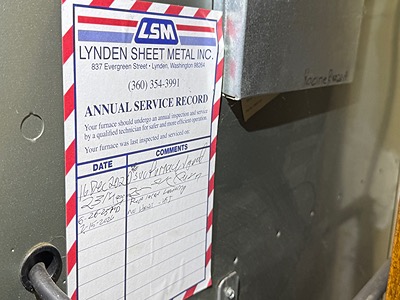
64) The last service date of the gas or oil-fired forced air furnace appeared to be more than 1 year ago, or the inspector was unable to determine the last service date. Ask the property owner when it was last serviced. If unable to determine the last service date, or if this system was serviced more than 1 year ago, recommend that a qualified HVAC contractor inspect, clean, and service this system, and make repairs if necessary. For safety reasons, and because this system is fueled by gas or oil, this servicing should be performed annually in the future. Any needed repairs noted in this report should be brought to the attention of the HVAC contractor when it's serviced. For more information visit: https://www.reporthost.com/?ANFURINSP
Photo 64-1
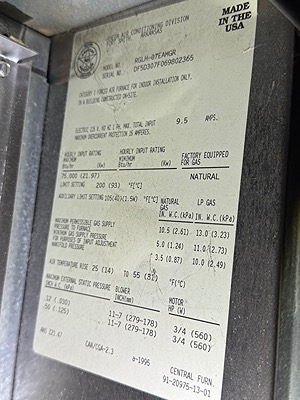
65) The estimated useful life for most forced air furnaces is 15-20 years. This furnace appeared to be beyond this age and/or its useful lifespan and may need replacing or significant repairs at any time. Recommend budgeting for a replacement in the near future.
Photo 65-1
Fireplaces, Stoves, Chimneys and Flues
69) One or more metal flue caps for B-vent or L-vent flues were corroded. Such metal flues should terminate with a bird-proof and weatherproof cap. Recommend that a qualified person repair per standard building practices
Photo 69-1
70) One or more solid fuel-burning fireplaces or stoves were found at the property. When such devices are used, they should be professionally inspected and cleaned annually to prevent creosote build-up and to determine if repairs are needed. The National Fire Protection Association states that a "Level 2" chimney inspection should be performed with every sale or transfer of property with a wood-burning device. Recommend consulting with the property owner about recent and past servicing and repairs to all wood-burning devices and chimneys or flues at this property. Recommend that a qualified specialist evaluate all solid fuel-burning devices and chimneys, and clean and repair as necessary. Note that if a wood stove insert is installed, it may need to be removed for such an evaluation. For more information, search for "chimney inspection" at: https://www.reporthost.com/?CSIA
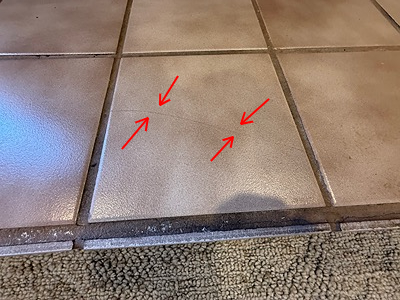
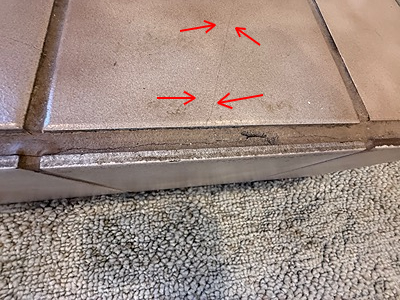
71) The hearth pad for the wood stove was damaged, cracked or deteriorated. Recommend that a qualified person repair as necessary.
Photo 71-1 Photo 71-2
Kitchen
74) The under-sink food disposal was noisy or vibrated excessively. Recommend that a qualified contractor repair or replace as necessary.
75) Kitchen sink drain was leaking. A qualified plumber should repair as necessary.
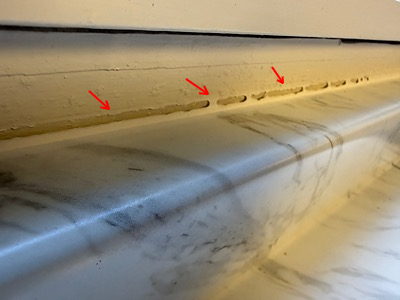
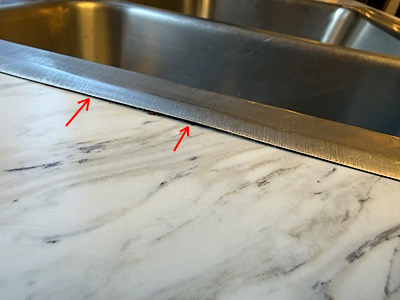
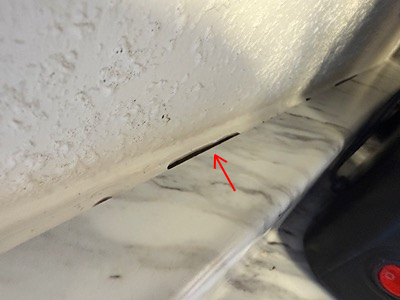
76) Gaps, no caulk, or substandard caulking were found between countertops and backsplashes and/or around the sink. Water may penetrate these areas and cause damage. Recommend that a qualified person repair as necessary. For example, by installing caulk.
Photo 76-1 Photo 76-2
Photo 76-3
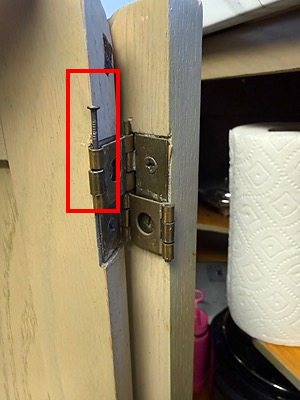
77) Cabinet hardware such as hinges, latches, closers, magnets or pulls were loose, missing or damaged at one or more cabinet drawers, doors or turntables. Recommend that a qualified person repair as necessary.
Photo 77-1
Bathrooms, Laundry and Sinks
80) The clothes dryer was equipped with a vinyl or mylar, accordion-type, flexible exhaust duct. The U.S. Consumer Product Safety Commission considers these types of ducts to be unsafe, and a fire hazard. They can trap lint and are susceptible to kinks or crushing, which can greatly reduce the air flow and cause overheating. Recommend that such ducts be replaced with a rigid or corrugated semi-rigid metal duct, and by a qualified contractor if necessary. For more information, visit: https://www.reporthost.com/?DRYER
Photo 80-1
81) The clothes dryer exhaust duct was kinked, crushed or damaged. Air flow will be restricted as a result and the clothes dryer may overheat. This is a safety hazard due to the risk of fire. Recommend that a qualified person replace or repair the duct as necessary. For more information, visit: https://www.reporthost.com/?DRYER
Photo 81-1
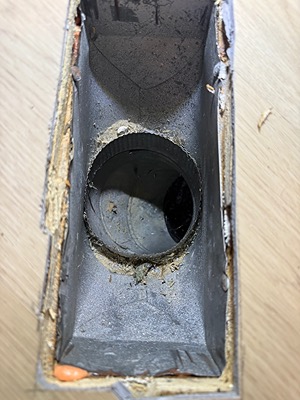
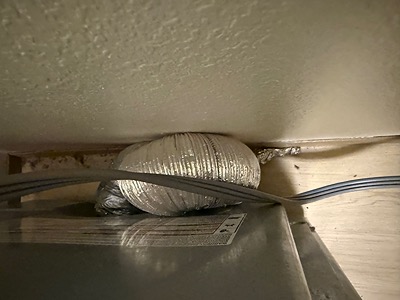
82) The clothes dryer exhaust duct appeared to need cleaning. Significant amounts of lint build-up were visible and may reduce air flow. This is a fire hazard. Recommend that a qualified person clean this duct now and as necessary in the future. Some chimney sweeps or heating/cooling duct cleaners perform this service. For more information, visit: https://www.reporthost.com/?DRYER
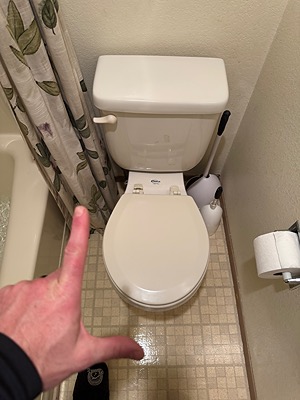
83) The toilet at location(s) #C was loose where it attached to the floor. Leaks can occur. Flooring, the sub-floor or areas below may get damaged. Sewer gases can enter living spaces. Recommend that a qualified contractor remove the toilet(s) for further evaluation and repair if necessary. A new wax ring should be installed and toilet(s) should be securely anchored to the floor to prevent movement and leaking.
Photo 83-1
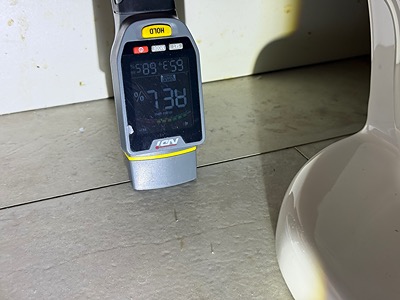
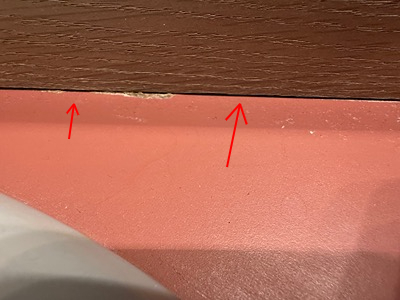
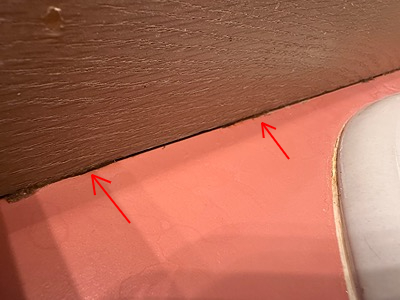
84) Vinyl flooring with seams was installed in the bathroom at location(s) #B. Spilled water can penetrate seams and damage the sub-floor. Recommend that a qualified contractor install continuous waterproof flooring in wet areas such as bathrooms.
Photo 84-1
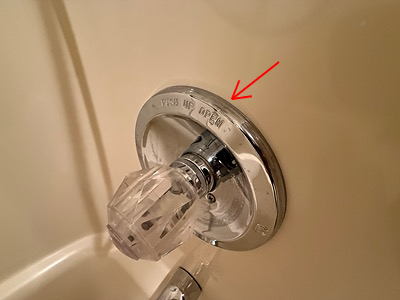
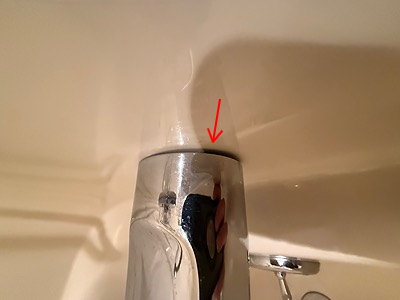
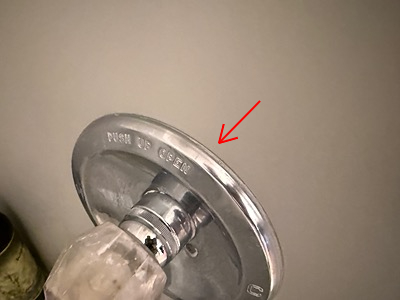
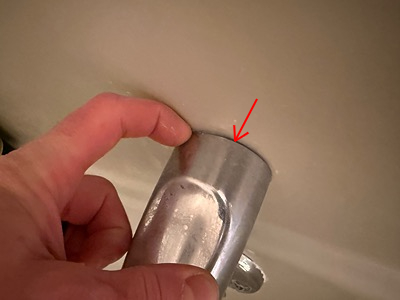
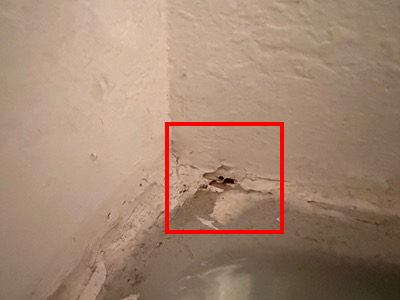
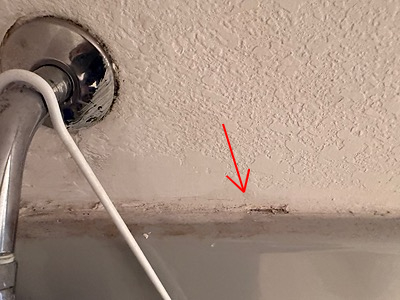
85) Caulk was missing around the base of the bathtub spout, or there was a gap behind it, at location(s) #A, B and C. Water may enter the wall structure behind the bathtub. Recommend that a qualified person repair as necessary to eliminate the gap. For example, by installing or replacing caulk if the gap is small enough. For larger gaps, a shorter spout nipple or an escutcheon plate can be installed.
Photo 85-1 Photo 85-2
Photo 85-3 Photo 85-4
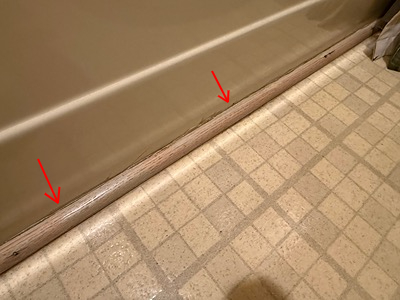
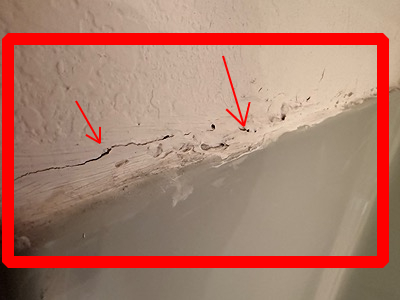
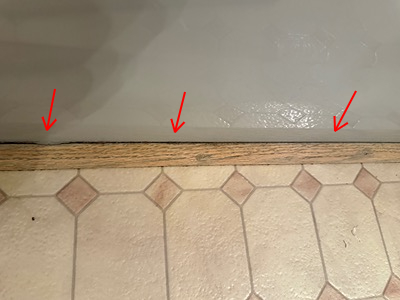
86) Gaps, no caulk, or substandard caulking were found between the bathtub and the floor and/or walls at location(s) #B and C. Water may penetrate these areas and cause damage. Recommend that a qualified person re-caulk or install caulking as necessary.
Photo 86-1 Photo 86-2
Photo 86-3 Photo 86-4
Photo 86-5
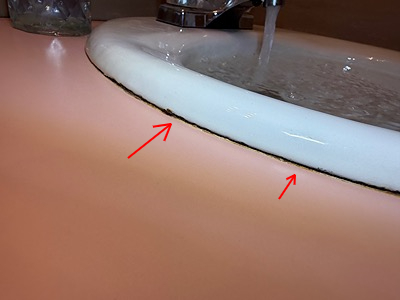
87) Gaps, no caulk, or substandard caulking were found between countertops and backsplashes and/or around the sink at location(s) #A, B and C. Water can penetrate these areas and cause damage. Recommend that a qualified person repair as necessary. For example, by installing or replacing caulk.
Photo 87-1 Photo 87-2
Photo 87-3
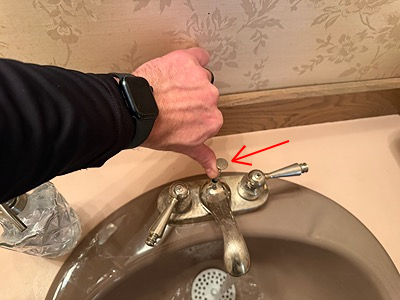
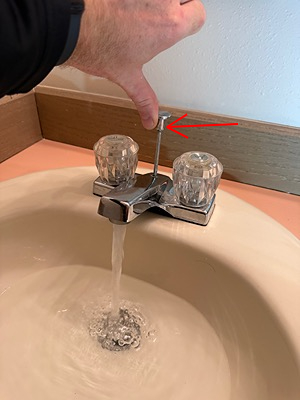
88) The sink drain stopper mechanism at location(s) #B and C was inoperable. Recommend that a qualified person repair or replace as necessary.
Photo 88-1 Photo 88-2
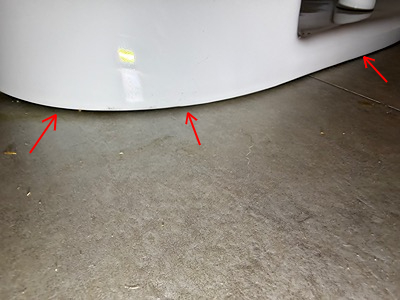
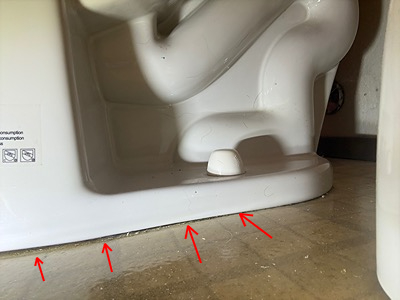
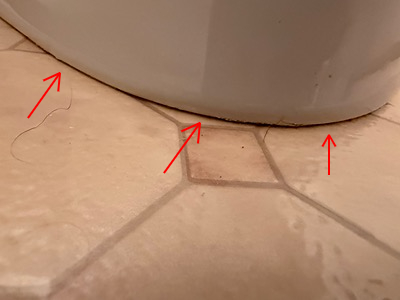
89) Caulk around the base of the toilet at location(s) #A, B and C was missing, substandard and/or deteriorated. Modern standards require caulk to be installed around the entire toilet base where it meets the floor for sanitary reasons. Without it, soiled water can soak into flooring and sub-floor materials if the toilet overflows. Condensation from the toilet can also soak into the flooring. Recommend that a qualified person caulk around toilet bases per standard building practices.
Photo 89-1 Photo 89-2
Photo 89-3
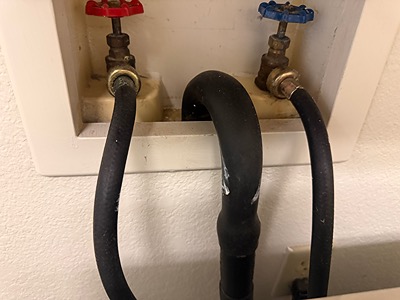
90) Rubber water supply hoses were installed at the clothes washer. These hoses are prone to bursting when deteriorated, which can result in flooding and significant water damage. Recommend upgrading to braided, stainless steel hoses.
Photo 90-1
Interior, Doors and Windows
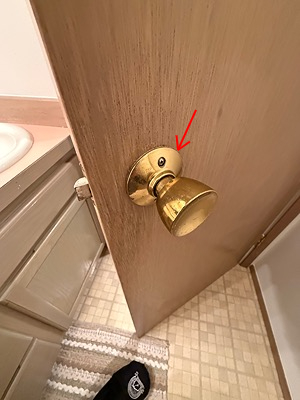
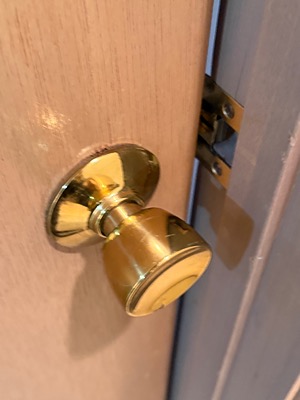
91) Some interior door hardware (locksets) were loose. Recommend that a qualified person repair or replace as necessary.
Photo 91-1
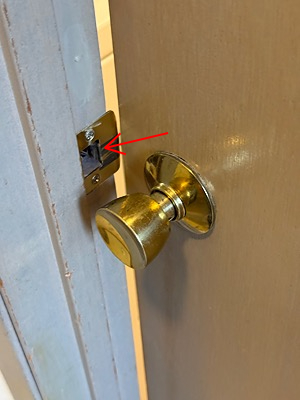
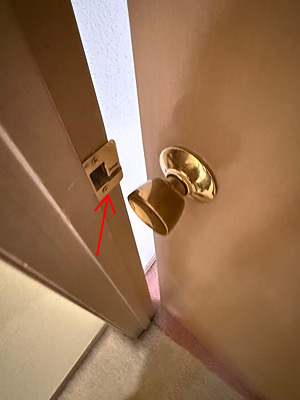
92) One or more interior doors wouldn't latch or were difficult to latch. Recommend that a qualified person repair as necessary. For example, by adjusting latch plates or locksets.




 Evidence of rodent infestation was found in the form of feces and/or traps in the attic and/or crawl space. Consult with the property owner about this. A qualified person should make repairs to seal openings in the structure, set traps, and clean rodent waste as necessary. Recommend following guidelines in these Center for Disease Control articles: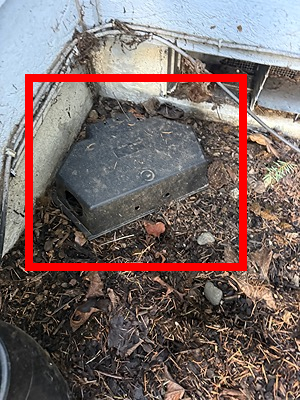
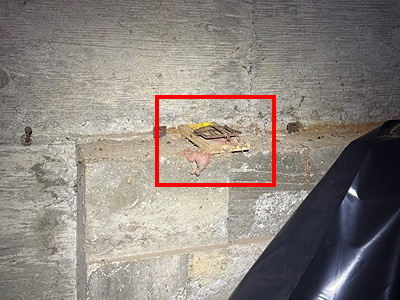
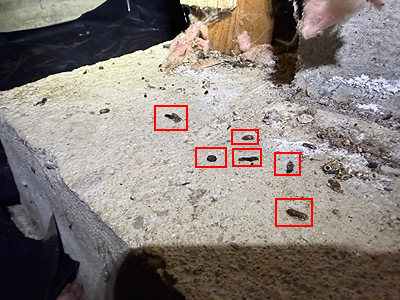

 Microbial growths were found at one or more locations in the attic. It is beyond the scope of this inspection to identify what substance or organism this staining is. However such staining is normally caused by excessively moist conditions, which in turn can be caused by plumbing or building envelope leaks and/or substandard ventilation. These conducive conditions should be corrected before making any attempts to remove or correct the staining. Normally affected materials such as drywall are removed, enclosed affected spaces are allowed to dry thoroughly, a mildewcide may be applied, and only then is drywall reinstalled. For evaluation and possible mitigation, consult with a qualified industrial hygienist or mold/moisture mitigation specialist. For more information, visit: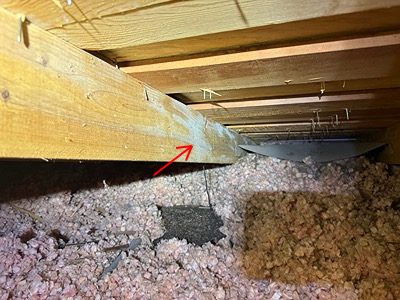
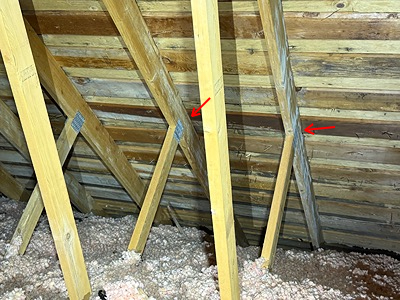

 One or more windows or doors were installed with no "drip cap" or "Z" flashings installed above them. Better building practices call for such flashings, which greatly reduce the chance of leaks above windows and doors. Without this flashing, caulk and paint must be maintained or water can enter the wall structure and cause rot and possible structural damage. Depending on the exposure (e.g. roof overhang, height of exterior wall, direction of prevailing rain) this may or may not be an issue. The client should monitor these areas in the future and maintain caulk and paint as necessary. Consult with a qualified contractor about installing flashings where needed, and per standard building practices. Note that when trim or siding is removed to install flashing, damaged wood may be found and additional repairs may be needed.

 One or more "plug-in" type carbon monoxide alarms were found. Because such CO alarms can be easily removed, recommend that home buyers verify that CO alarms haven't been removed upon taking occupancy. If removed, then recommend installing new CO alarms in the vicinity of sleeping areas and on each level. Note that some states and/or municipalities require CO alarms to be installed for new construction and/or for homes being sold. For more information, visit: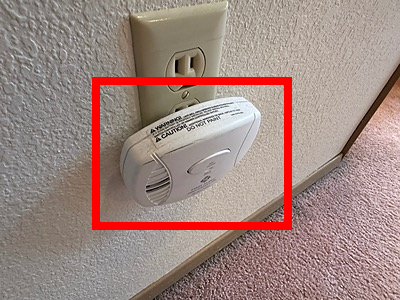
 The clothes dryer exhaust duct appeared to need cleaning. Significant amounts of lint build-up were visible and may reduce air flow. This is a fire hazard. Recommend that a qualified person clean this duct now and as necessary in the future. Some chimney sweeps or heating/cooling duct cleaners perform this service. For more information, visit: