

(708) 473-5116
Inspector: Mark Glowczynski
Illinois License Number: 450.010389
Summary
| Client(s): | Inspection Client |
| Property address: | 1060 West Addison Chicago, Il 60611 |
| Inspection date: | Saturday, April 14, 2018 |
This report published on Friday, October 12, 2018 2:06:37 PM CDT
This report is the exclusive property of this inspection company and the client(s) listed in the report title. Use of this report by any unauthorized persons is prohibited.
This house may or may not have been inspected for mold. Please check your pre-inspection agreements. The report may contain comments that might include the possibility for mold or conditions conducive for mold. Right at Home may suggest that a separate mold inspection be performed.
Right at Home shall not make any suggestions to purchase or not purchase the house based on the inspection findings.
Right at Home shall not make any determinations of habitation based on inspection findings.
 | Safety | Poses a risk of injury or death |
 | Costly Defect | Correction likely involves a significant expense |
 | Repair/Replace | Recommend repairing or replacing |
 | Repair/Maintain | Recommend repair and/or maintenance |
 | Minor Defect | Correction likely involves only a minor expense |
 | Maintain | Recommend ongoing maintenance |
 | Evaluate | Recommend evaluation by a specialist |
 | Comment | For your information |
 | Conducive conditions | Conditions conducive for wood destroying insects or organisms or moisture intrusion (Wood-soil contact, shrubs in contact with siding, roof or plumbing leaks, etc.) |
General information
1) This property has one or more fuel burning appliances, and no carbon monoxide alarms are visible. This is a safety hazard. Recommend installing one or more carbon monoxide alarms as necessary and as per the manufacturer's instructions. For more information, visit http://www.cpsc.gov/CPSCPUB/PREREL/prhtml05/05017.html
This property has one or more fuel burning appliances, and no carbon monoxide alarms are visible. This is a safety hazard. Recommend installing one or more carbon monoxide alarms as necessary and as per the manufacturer's instructions. For more information, visit http://www.cpsc.gov/CPSCPUB/PREREL/prhtml05/05017.html
2) Structures built prior to 1979 may contain lead-based paint and/or asbestos in various building materials such as insulation, siding, and/or floor and ceiling tiles. Both lead and asbestos are known health hazards. Evaluating for the presence of lead and/or asbestos is not included in this inspection. The client(s) should consult with specialists as necessary, such as industrial hygienists, professional labs and/or abatement contractors for this type of evaluation. For information on lead, asbestos and other hazardous materials in homes, visit these websites:
Structures built prior to 1979 may contain lead-based paint and/or asbestos in various building materials such as insulation, siding, and/or floor and ceiling tiles. Both lead and asbestos are known health hazards. Evaluating for the presence of lead and/or asbestos is not included in this inspection. The client(s) should consult with specialists as necessary, such as industrial hygienists, professional labs and/or abatement contractors for this type of evaluation. For information on lead, asbestos and other hazardous materials in homes, visit these websites:
3) Structures built prior to the mid 1980s may contain lead and/or asbestos. Lead is commonly found in paint and in some plumbing components. The EPA does not recognize newer coats of paint as encapsulating older coats of lead-based paint. Asbestos is commonly found in various building materials such as insulation, siding, and/or floor and ceiling tiles. Laws were passed in 1978 to prohibit usage of lead and asbestos, but stocks of materials containing these substances remained in use for a number of years thereafter. Both lead and asbestos are known health hazards. Evaluating for the presence of lead and/or asbestos is beyond the scope of this inspection. Any mention of these materials in this report is made as a courtesy only, and meant to refer the client to a specialist. Consult with specialists as necessary, such as industrial hygienists, professional labs and/or abatement specialists for this type of evaluation. For information on lead, asbestos and other hazardous materials in homes, visit:
http://www.reporthost.com/?EPA
http://www.reporthost.com/?CPSC
http://www.reporthost.com/?CDC
Structures built prior to the mid 1980s may contain lead and/or asbestos. Lead is commonly found in paint and in some plumbing components. The EPA does not recognize newer coats of paint as encapsulating older coats of lead-based paint. Asbestos is commonly found in various building materials such as insulation, siding, and/or floor and ceiling tiles. Laws were passed in 1978 to prohibit usage of lead and asbestos, but stocks of materials containing these substances remained in use for a number of years thereafter. Both lead and asbestos are known health hazards. Evaluating for the presence of lead and/or asbestos is beyond the scope of this inspection. Any mention of these materials in this report is made as a courtesy only, and meant to refer the client to a specialist. Consult with specialists as necessary, such as industrial hygienists, professional labs and/or abatement specialists for this type of evaluation. For information on lead, asbestos and other hazardous materials in homes, visit:http://www.reporthost.com/?EPA
http://www.reporthost.com/?CPSC
http://www.reporthost.com/?CDC
4) Several rooms in the house have unfinished floors and half painted walls. Some walls have holes in them or unfinished patches to them. Some doors have holes in them.
Recommend having and appropriate qualified repair person make proper repairs.
Several rooms in the house have unfinished floors and half painted walls. Some walls have holes in them or unfinished patches to them. Some doors have holes in them. Recommend having and appropriate qualified repair person make proper repairs.
Exterior
5) One or more outdoor electric receptacles appear to have no ground fault circuit interrupter (GFCI) protection. This is a safety hazard due to the risk of shock. A qualified electrician should evaluate to determine if GFCI protection exists, and if not, repairs should be made so that all outdoor receptacles within six feet six inches of ground level have GFCI protection. For example, install GFCI receptacles or circuit breaker(s) as needed.
Area of concern is front left of house.
One or more outdoor electric receptacles appear to have no ground fault circuit interrupter (GFCI) protection. This is a safety hazard due to the risk of shock. A qualified electrician should evaluate to determine if GFCI protection exists, and if not, repairs should be made so that all outdoor receptacles within six feet six inches of ground level have GFCI protection. For example, install GFCI receptacles or circuit breaker(s) as needed.Area of concern is front left of house.
6) One or more outside faucets are missing backflow prevention devices. These devices reduce the likelihood of polluted or contaminated water entering the potable water supply. This condition can occur when an outside faucet is left in the "on" position with a hose connected and the sprayer head turned off. When pressure in the system fluctuates, water can be drawn back into the water supply pipes from the house. If a chemical sprayer is being used with the hose, those chemicals can enter the water supply pipes.
Recommend installing backflow prevention devices on all exterior hose bibs where missing. They are available at most home improvement stores and are easily installed. For more information, visit:
http://edis.ifas.ufl.edu/AE113
One or more outside faucets are missing backflow prevention devices. These devices reduce the likelihood of polluted or contaminated water entering the potable water supply. This condition can occur when an outside faucet is left in the "on" position with a hose connected and the sprayer head turned off. When pressure in the system fluctuates, water can be drawn back into the water supply pipes from the house. If a chemical sprayer is being used with the hose, those chemicals can enter the water supply pipes. Recommend installing backflow prevention devices on all exterior hose bibs where missing. They are available at most home improvement stores and are easily installed. For more information, visit:
http://edis.ifas.ufl.edu/AE113
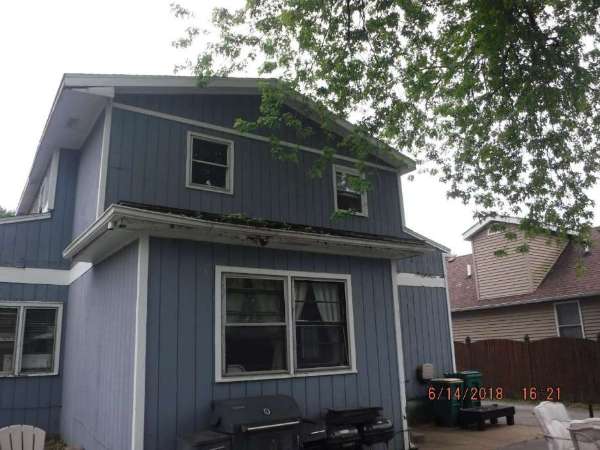
7) Siding is damaged and/or deteriorated in one or more areas. A qualified contractor should evaluate and make repairs and/or replace siding as necessary to prevent water and vermin intrusion.
Several areas on the house are of concern.
Siding is damaged and/or deteriorated in one or more areas. A qualified contractor should evaluate and make repairs and/or replace siding as necessary to prevent water and vermin intrusion.Several areas on the house are of concern.
8) Soffit boards are damaged or deteriorated in one or more areas. A qualified contractor should evaluate and make repairs as necessary.
Several areas of the house are of concern.
Soffit boards are damaged or deteriorated in one or more areas. A qualified contractor should evaluate and make repairs as necessary.Several areas of the house are of concern.
9) Fascia boards are damaged or deteriorated in one or more areas. A qualified contractor should evaluate and make repairs as necessary.
Several areas of the house are of concern.
Fascia boards are damaged or deteriorated in one or more areas. A qualified contractor should evaluate and make repairs as necessary.Several areas of the house are of concern.
10) One or more downspouts are missing. This can result in water accumulating around the structure's foundation, or in basements and crawl spaces if they exist. Accumulated water is a conducive condition to wood destroying insects and organisms, and may also cause the foundation to settle and possibly fail over time. A qualified contractor should install downspout(s) where missing. Also recommend installing extensions such as splashblocks or tie-ins to underground drain lines as necessary to carry rainwater away from the house.
One or more downspouts are missing. This can result in water accumulating around the structure's foundation, or in basements and crawl spaces if they exist. Accumulated water is a conducive condition to wood destroying insects and organisms, and may also cause the foundation to settle and possibly fail over time. A qualified contractor should install downspout(s) where missing. Also recommend installing extensions such as splashblocks or tie-ins to underground drain lines as necessary to carry rainwater away from the house.
11) One or more gutters are damaged. This can result in water accumulating around the structure's foundation, or in basements and crawl spaces if they exist. Accumulated water is a conducive condition to wood destroying insects and organisms, and may also cause the foundation to settle and possibly fail over time. A qualified contractor should replace or repair gutters where necessary.
Area of concern is rear of house.
One or more gutters are damaged. This can result in water accumulating around the structure's foundation, or in basements and crawl spaces if they exist. Accumulated water is a conducive condition to wood destroying insects and organisms, and may also cause the foundation to settle and possibly fail over time. A qualified contractor should replace or repair gutters where necessary.Area of concern is rear of house.
12) One or more minor cracks (1/8 inch or less) were found in the foundation. These don't appear to be a structural concern, but recommend sealing them to prevent water infiltration and monitoring them in the future. Numerous products exist to seal such cracks including:
This is indicated only to the fact that the foundation is constructed of field stone, and there are natural cracks/seams between the courses of stone. The same concern should be taken as if there are cracks. The parging on the outside appears to failing as well.
There is a hole in foundation on right side of house next to water spigot.
I recommend evaluation by a structural engineer or qualified foundation repair contractor with experience in this type of foundation and repair as needed.
One or more minor cracks (1/8 inch or less) were found in the foundation. These don't appear to be a structural concern, but recommend sealing them to prevent water infiltration and monitoring them in the future. Numerous products exist to seal such cracks including:- Hydraulic cement. Requires chiseling a channel in the crack to apply.
- Resilient caulks (easy to apply).
- Epoxy sealants (both a waterproof and structural repair).
This is indicated only to the fact that the foundation is constructed of field stone, and there are natural cracks/seams between the courses of stone. The same concern should be taken as if there are cracks. The parging on the outside appears to failing as well.
There is a hole in foundation on right side of house next to water spigot.
I recommend evaluation by a structural engineer or qualified foundation repair contractor with experience in this type of foundation and repair as needed.
13) Soil is in contact with or less than six inches from siding and/or trim. This is a conducive condition for wood destroying insects and organisms. Soil should be graded and/or removed as necessary so there are at least six inches of space between the siding and trim and the soil below.
Area of concern is right side toward rear.
Soil is in contact with or less than six inches from siding and/or trim. This is a conducive condition for wood destroying insects and organisms. Soil should be graded and/or removed as necessary so there are at least six inches of space between the siding and trim and the soil below.Area of concern is right side toward rear.
14) Vegetation such as trees, shrubs and/or vines are in contact with or less than one foot from the structure's exterior. Vegetation can serve as a conduit for wood destroying insects and may retain moisture against the exterior after it rains. Vegetation should be pruned and/or removed as necessary to maintain a one foot clearance between it and the structure's exterior.
Vegetation such as trees, shrubs and/or vines are in contact with or less than one foot from the structure's exterior. Vegetation can serve as a conduit for wood destroying insects and may retain moisture against the exterior after it rains. Vegetation should be pruned and/or removed as necessary to maintain a one foot clearance between it and the structure's exterior.
15) Trees and/or shrubs are in contact with or are close to the roof edge(s) in one or more areas. Damage to the roof may result, especially during high winds. Vegetation can also act as a conduit for wood destroying insects. Vegetation should be pruned back and/or removed as necessary to prevent damage and infestation by wood destroying insects.
Area of concern is rear of house.
Trees and/or shrubs are in contact with or are close to the roof edge(s) in one or more areas. Damage to the roof may result, especially during high winds. Vegetation can also act as a conduit for wood destroying insects. Vegetation should be pruned back and/or removed as necessary to prevent damage and infestation by wood destroying insects.Area of concern is rear of house.
16) The exterior finish in some areas is failing. A qualified contractor should prep (pressure wash, scrape, sand, prime caulk, etc.) and repaint or restain areas as needed and as per standard building practices.
All sides of the house have several areas that need attention.
The exterior finish in some areas is failing. A qualified contractor should prep (pressure wash, scrape, sand, prime caulk, etc.) and repaint or restain areas as needed and as per standard building practices.All sides of the house have several areas that need attention.
Grounds
17) The asphalt driveway surface was worn and is prone to developing cracks from water penetration. Recommend that a qualified person reseal the driveway. For more information, visit:
http://www.reporthost.com/?RAD
The asphalt driveway surface was worn and is prone to developing cracks from water penetration. Recommend that a qualified person reseal the driveway. For more information, visit:http://www.reporthost.com/?RAD
18) No outbuildings or detached structures were evaluated. They are excluded from this inspection.
No outbuildings or detached structures were evaluated. They are excluded from this inspection.
19) All areas of the porch substructure were inaccessible due to limited space below. These areas couldn't be evaluated and are excluded from the inspection.
All areas of the porch substructure were inaccessible due to limited space below. These areas couldn't be evaluated and are excluded from the inspection.
Roof
20) Trees are overhanging roof and are within 10 feet of roof vertically. This is a conducive condition for wood destroying insects and organisms since organic debris such as leaves or needles are more likely to accumulate on the roof surface. Accumulated debris may cause water to enter gaps in the roof surface and leak into attic and/or interior spaces. Trees should be pruned so they are at least 10 feet above roof, or don't overhang the roof.
Trees are overhanging roof and are within 10 feet of roof vertically. This is a conducive condition for wood destroying insects and organisms since organic debris such as leaves or needles are more likely to accumulate on the roof surface. Accumulated debris may cause water to enter gaps in the roof surface and leak into attic and/or interior spaces. Trees should be pruned so they are at least 10 feet above roof, or don't overhang the roof.
21) Trees and/or shrubs are in contact with or are close to the roof edge(s) in one or more areas. Damage to the roof may result, especially during high winds. Vegetation can also act as a conduit for wood destroying insects. Vegetation should be pruned back and/or removed as necessary to prevent damage and infestation by wood destroying insects.
Trees and/or shrubs are in contact with or are close to the roof edge(s) in one or more areas. Damage to the roof may result, especially during high winds. Vegetation can also act as a conduit for wood destroying insects. Vegetation should be pruned back and/or removed as necessary to prevent damage and infestation by wood destroying insects.
22) The coating on the flat roof has deteriorated and may result in a shortened service life. A qualified roofing contractor should apply a new roof coating now and as necessary in the future. Typically this is done every four to five years.
The coating on the flat roof has deteriorated and may result in a shortened service life. A qualified roofing contractor should apply a new roof coating now and as necessary in the future. Typically this is done every four to five years.
Garage
23) Cover plate(s) are missing from one or more electric boxes, such as for receptacles, switches and/or junction boxes. They are intended to contain fire and prevent electric shock from exposed wires. This is a safety hazard due to the risk of fire and shock. Cover plates should be installed where missing.
Cover plate(s) are missing from one or more electric boxes, such as for receptacles, switches and/or junction boxes. They are intended to contain fire and prevent electric shock from exposed wires. This is a safety hazard due to the risk of fire and shock. Cover plates should be installed where missing.
24) Many areas of the wood siding are deteriorated, and there holes in some areas of siding. Consider consult a qualified repair person to make proper repairs.
Many areas of the wood siding are deteriorated, and there holes in some areas of siding. Consider consult a qualified repair person to make proper repairs.
25) The vehicle door is difficult or unable to open or close. Vehicle doors should open and close smoothly and easily. A qualified contractor should evaluate and make repairs as necessary.
The door shakes the first two feet approximately when opening.
The vehicle door is difficult or unable to open or close. Vehicle doors should open and close smoothly and easily. A qualified contractor should evaluate and make repairs as necessary. The door shakes the first two feet approximately when opening.
26) Weatherstrip at the sides and/or bottom of the vehicle door is damaged and/or deteriorated. It should be replaced where necessary to prevent water and vermin intrusion.
Area of concern is the right side when looking from outside.
Weatherstrip at the sides and/or bottom of the vehicle door is damaged and/or deteriorated. It should be replaced where necessary to prevent water and vermin intrusion. Area of concern is the right side when looking from outside.
27) Much of the garage, including areas around the interior perimeter and in the center are excluded from this inspection due to lack of access from stored items.
Much of the garage, including areas around the interior perimeter and in the center are excluded from this inspection due to lack of access from stored items.
Attic
28) One or more exhaust fan ducts terminate in attic because no vent cap is installed at the roof or exterior wall surfaces. This is a conducive condition for wood destroying insects and organisms due to increased moisture levels in the attic from the exhaust air. A qualified contractor should evaluate and install vent caps where missing and as per standard building practices, so all exhaust air is vented outside.
The bathroom vent terminates just below the vent cal. The should be installed in a more positively attached manner to avoid any possible downdraft preventing moisture from being vented outside.
One or more exhaust fan ducts terminate in attic because no vent cap is installed at the roof or exterior wall surfaces. This is a conducive condition for wood destroying insects and organisms due to increased moisture levels in the attic from the exhaust air. A qualified contractor should evaluate and install vent caps where missing and as per standard building practices, so all exhaust air is vented outside.The bathroom vent terminates just below the vent cal. The should be installed in a more positively attached manner to avoid any possible downdraft preventing moisture from being vented outside.
29) Ceiling insulation is uneven in some areas. This is likely due to someone having walked on or through the insulation. Recommend installing additional insulation where necessary to restore the original R rating.
Ceiling insulation is uneven in some areas. This is likely due to someone having walked on or through the insulation. Recommend installing additional insulation where necessary to restore the original R rating.
Electric service
30) One or more electric receptacles at the basement had no visible ground fault circuit interrupter (GFCI) protection, or the inspector was unable to determine if GFCI protection was present. If not GFCI-protected, receptacles in wet areas pose a shock hazard. Recommend that a qualified electrician evaluate and install GFCI protection if necessary and per standard building practices. General guidelines for GFCI-protected receptacles include the following locations:
http://www.reporthost.com/?GFCI
One or more electric receptacles at the basement had no visible ground fault circuit interrupter (GFCI) protection, or the inspector was unable to determine if GFCI protection was present. If not GFCI-protected, receptacles in wet areas pose a shock hazard. Recommend that a qualified electrician evaluate and install GFCI protection if necessary and per standard building practices. General guidelines for GFCI-protected receptacles include the following locations:- Outdoors (since 1973)
- Bathrooms (since 1975)
- Garages (since 1978)
- Kitchens (since 1987)
- Crawl spaces and unfinished basements (since 1990)
- Wet bar sinks (since 1993)
- Laundry and utility sinks (since 2005)
http://www.reporthost.com/?GFCI
31) The electric service was configured so that too many hand movements were necessary to turn off all power for the service. Six or fewer circuit breakers should be required to turn off all power to a residence. This is a potential safety hazard during an emergency when the power needs to be turned off quickly. Recommend that a qualified electrician repair per standard building practices.
The electric service was configured so that too many hand movements were necessary to turn off all power for the service. Six or fewer circuit breakers should be required to turn off all power to a residence. This is a potential safety hazard during an emergency when the power needs to be turned off quickly. Recommend that a qualified electrician repair per standard building practices.
32) One or more knockouts were missing from panel(s) #A. Holes in panels are a potential fire hazard if a malfunction ever occurs inside the panel. Rodents can also enter panels through holes. Recommend that a qualified person install knockout covers where missing and per standard building practices.
One or more knockouts were missing from panel(s) #A. Holes in panels are a potential fire hazard if a malfunction ever occurs inside the panel. Rodents can also enter panels through holes. Recommend that a qualified person install knockout covers where missing and per standard building practices.
33) One or more cover plates for switches, receptacles or junction boxes were missing or broken. These plates are intended to contain fire and prevent electric shock from occurring due to exposed wires. Recommend that a qualified person install cover plates where necessary.
One or more cover plates for switches, receptacles or junction boxes were missing or broken. These plates are intended to contain fire and prevent electric shock from occurring due to exposed wires. Recommend that a qualified person install cover plates where necessary.
34) One or more electric receptacles appeared to have no power. Recommend asking the property owner about this. Switches may need to be operated or GFCI/AFCI protection may need to be reset to make some receptacles energized. If necessary, recommend that a qualified electrician evaluate and repair.
One or more electric receptacles appeared to have no power. Recommend asking the property owner about this. Switches may need to be operated or GFCI/AFCI protection may need to be reset to make some receptacles energized. If necessary, recommend that a qualified electrician evaluate and repair.
35) Bulbs in one or more light fixtures were missing or broken. These light fixtures couldn't be fully evaluated. If replacement bulbs are inoperable, then recommend that a qualified electrician evaluate and repair or replace light fixtures as necessary.
Bulbs in one or more light fixtures were missing or broken. These light fixtures couldn't be fully evaluated. If replacement bulbs are inoperable, then recommend that a qualified electrician evaluate and repair or replace light fixtures as necessary.
Water heater
36) No drain line is installed for the temperature-pressure relief valve. This is a potential safety hazard due to the risk of scalding if someone is standing next to the water heater when the valve opens. A qualified plumber should install a drain line as per standard building practices. For example, extending to 6 inches from the floor, or routed so as to drain outside.
No drain line is installed for the temperature-pressure relief valve. This is a potential safety hazard due to the risk of scalding if someone is standing next to the water heater when the valve opens. A qualified plumber should install a drain line as per standard building practices. For example, extending to 6 inches from the floor, or routed so as to drain outside.
37) The estimated useful life for most water heaters is 8 to 12 years. This water heater appears to be at this age or older and may need replacing at any time. Recommend budgeting for a replacement in the near future.
The estimated useful life for most water heaters is 8 to 12 years. This water heater appears to be at this age or older and may need replacing at any time. Recommend budgeting for a replacement in the near future.
38) Corrosion was found in one or more areas on the water heater, and water stains were found below. The water heater may be failing. A qualified plumbing contractor should evaluate and replace water heater if necessary.
Corrosion was found in one or more areas on the water heater, and water stains were found below. The water heater may be failing. A qualified plumbing contractor should evaluate and replace water heater if necessary.
39) Active water leak in piping of water heater. Consult a qualified repair person for repairs.
Active water leak in piping of water heater. Consult a qualified repair person for repairs.
Heating and cooling
40) There is rust on the heat exchanger. Rust poses a particular danger to your furnace and you: corrosion across the heat exchanger. If a heat exchanger starts to corrode, it can develop cracks which will allow carbon monoxide exhaust to escape into the cabinet and possibly into your living spaces. Consult a qualified repair person for repairs.
There is rust on the heat exchanger. Rust poses a particular danger to your furnace and you: corrosion across the heat exchanger. If a heat exchanger starts to corrode, it can develop cracks which will allow carbon monoxide exhaust to escape into the cabinet and possibly into your living spaces. Consult a qualified repair person for repairs.
41) The estimated useful life for most forced air furnaces is 15 to 20 years. This furnace appears to be at this age or older and may need replacing at any time. Recommend budgeting for a replacement in the near future.
The estimated useful life for most forced air furnaces is 15 to 20 years. This furnace appears to be at this age or older and may need replacing at any time. Recommend budgeting for a replacement in the near future.
42) The last service date of this system appears to be more than one year ago, or the inspector was unable to determine the last service date. The client(s) should ask the property owner(s) when it was last serviced. If unable to determine the last service date, or if this system was serviced more than one year ago, a qualified heating and cooling contractor should inspect, clean, and service this system, and make repairs if necessary. This servicing should be performed annually in the future.
The last service date of this system appears to be more than one year ago, or the inspector was unable to determine the last service date. The client(s) should ask the property owner(s) when it was last serviced. If unable to determine the last service date, or if this system was serviced more than one year ago, a qualified heating and cooling contractor should inspect, clean, and service this system, and make repairs if necessary. This servicing should be performed annually in the future.
43) Air handler filter(s) are dirty and should be replaced now. They should be checked monthly in the future and replaced as necessary.
Air handler filter(s) are dirty and should be replaced now. They should be checked monthly in the future and replaced as necessary.
Heating and cooling 2
44) This unit is located in a wet environment of the 2nd floor bath. This is a conducive condition for moisture problems within the system.
This unit is located in a wet environment of the 2nd floor bath. This is a conducive condition for moisture problems within the system.
45) The estimated useful life for most forced air furnaces is 15 to 20 years. The inspector was unable to determine the age of the furnace. The clients should be aware that this furnace may be near, at, or beyond its useful life and may need replacing at any time. Recommend attempting to determine the furnace's age (ask property owner or service technician), and budgeting for a replacement if necessary.
The estimated useful life for most forced air furnaces is 15 to 20 years. The inspector was unable to determine the age of the furnace. The clients should be aware that this furnace may be near, at, or beyond its useful life and may need replacing at any time. Recommend attempting to determine the furnace's age (ask property owner or service technician), and budgeting for a replacement if necessary.
Plumbing and laundry
46) The clothes dryer is equipped with a vinyl or foil, accordion-type, flexible exhaust duct. The U.S. Consumer Product Safety Commission considers these types of ducts to be unsafe, and a fire hazard. These types of ducts can trap lint and are susceptible to kinks or crushing, which can greatly reduce the air flow. This duct should be replaced with a rigid or corrugated semi-rigid metal duct, and by a qualified contractor if necessary. Most clothes dryer manufacturers specify the use of a rigid or corrugated semi-rigid metal duct. For more information, visit:
http://www.cpsc.gov/CPSCPUB/PUBS/5022.html
The clothes dryer is equipped with a vinyl or foil, accordion-type, flexible exhaust duct. The U.S. Consumer Product Safety Commission considers these types of ducts to be unsafe, and a fire hazard. These types of ducts can trap lint and are susceptible to kinks or crushing, which can greatly reduce the air flow. This duct should be replaced with a rigid or corrugated semi-rigid metal duct, and by a qualified contractor if necessary. Most clothes dryer manufacturers specify the use of a rigid or corrugated semi-rigid metal duct. For more information, visit:http://www.cpsc.gov/CPSCPUB/PUBS/5022.html
47) Some, most, or all of the water supply pipes in this structure are made of galvanized steel. Based on the age of this structure, these pipes may be nearing or may have exceeded their estimated useful life of 40 to 60 years. Internal corrosion and rust can reduce the inside diameter of these pipes over time, resulting in reduced flow and eventually, leaks. The inspector performed a "functional flow test" during the inspection where multiple fixtures were run simultaneously, and found the flow to be adequate. For example, the shower flow didn't decrease substantially when the toilet was flushed. Despite this, and because of their apparent age, these pipes may need replacing at any time.
Some, most, or all of the water supply pipes in this structure are made of galvanized steel. Based on the age of this structure, these pipes may be nearing or may have exceeded their estimated useful life of 40 to 60 years. Internal corrosion and rust can reduce the inside diameter of these pipes over time, resulting in reduced flow and eventually, leaks. The inspector performed a "functional flow test" during the inspection where multiple fixtures were run simultaneously, and found the flow to be adequate. For example, the shower flow didn't decrease substantially when the toilet was flushed. Despite this, and because of their apparent age, these pipes may need replacing at any time.
48) Neither the clothes washer nor dryer were operated or evaluated. They are excluded from this inspection.
Neither the clothes washer nor dryer were operated or evaluated. They are excluded from this inspection.
Basement
50) Standing water and/or wet areas were found in one or more sections of the basement. Accumulated water is a conducive condition for wood destroying insects and organisms and should not be present in the basement. A qualified contractor who specializes in drainage issues should evaluate and repair as necessary. Typical repairs for preventing water from accumulating in the basement include:
There is a laundry tub that does not have water lines run to it, rather the washer drains into it. It was excessively wet underneath and then following the natural slope in basement floor. The floor drain adjacent to tub had water to the top of it. Ideally, water should not enter the basement, but if water must be controlled after it enters the basement, then typical repairs include installing sump pump(s) or interior perimeter drains.
Standing water and/or wet areas were found in one or more sections of the basement. Accumulated water is a conducive condition for wood destroying insects and organisms and should not be present in the basement. A qualified contractor who specializes in drainage issues should evaluate and repair as necessary. Typical repairs for preventing water from accumulating in the basement include:- Repairing, installing or improving rain run-off systems (gutters, downspouts and extensions or drain lines)
- Improving perimeter grading
- Repairing, installing or improving underground footing and/or curtain drains
There is a laundry tub that does not have water lines run to it, rather the washer drains into it. It was excessively wet underneath and then following the natural slope in basement floor. The floor drain adjacent to tub had water to the top of it. Ideally, water should not enter the basement, but if water must be controlled after it enters the basement, then typical repairs include installing sump pump(s) or interior perimeter drains.
51) One or more adjustable steel columns were found. Some adjustable steel columns are rated for permanent use, but some are not. Based on the inspector's observations, columns in this building may not be rated for permanent use and may pose a safety risk for collapse. Recommend that a qualified contractor familiar with regulations surrounding use of such columns evaluate and repair if necessary, and per standard building practices and any applicable local codes.
One or more adjustable steel columns were found. Some adjustable steel columns are rated for permanent use, but some are not. Based on the inspector's observations, columns in this building may not be rated for permanent use and may pose a safety risk for collapse. Recommend that a qualified contractor familiar with regulations surrounding use of such columns evaluate and repair if necessary, and per standard building practices and any applicable local codes.
52) One or more support posts were constructed of multiple pieces of lumber instead of one continuous piece. Such posts lack strength and are subject to collapse during an earthquake. A single, solid piece of lumber that extends from the footing below to the beam above should be used for wooden support posts. Recommend that a qualified contractor repair per standard building practices.
One or more support posts were constructed of multiple pieces of lumber instead of one continuous piece. Such posts lack strength and are subject to collapse during an earthquake. A single, solid piece of lumber that extends from the footing below to the beam above should be used for wooden support posts. Recommend that a qualified contractor repair per standard building practices.
53) One or more joists were notched or had holes cut in them in such a way as to significantly weaken the joist(s). General guidelines for modifying joists made of dimensional lumber include these restrictions:
Moisture from above was noted in this area as well.
One or more joists were notched or had holes cut in them in such a way as to significantly weaken the joist(s). General guidelines for modifying joists made of dimensional lumber include these restrictions:- Notches at ends should not exceed 1/4 of the joist's depth.
- Other notches should not exceed 1/6 of the joist's depth.
- Notches should not be cut in the middle 1/3 of the joist's span.
- Notches should not be longer than 1/3 of the joist's depth.
- Holes must be 2 inches or more from the joist's edge.
- The maximum hole diameter is 1/3 of the depth of the joist.
Moisture from above was noted in this area as well.
54) Flex pipe visible in basement for the tub above. This is incorrect material as it will be easier to clog in future. Consider consulting a qualified plumber for proper repairs.
Flex pipe visible in basement for the tub above. This is incorrect material as it will be easier to clog in future. Consider consulting a qualified plumber for proper repairs.
55) One or more holes or gaps were found in the foundation. Vermin may enter the building substructure as a result. Recommend that a qualified person repair as necessary.
This was in small nook on east side of basement. This is visible and located near outside water spigot.
One or more holes or gaps were found in the foundation. Vermin may enter the building substructure as a result. Recommend that a qualified person repair as necessary.This was in small nook on east side of basement. This is visible and located near outside water spigot.
56) Some top course field stones in foundation are loose. Consider consulting a qualified repair person for repairs.
Some gaps within the foundation stones have been filled with spray foam. This is not the proper materials and method to repairing the foundation.
Some top course field stones in foundation are loose. Consider consulting a qualified repair person for repairs.Some gaps within the foundation stones have been filled with spray foam. This is not the proper materials and method to repairing the foundation.
57) There is black plastic covering something the right of electric service panel. This was not removed. Consider asking the current owner why this is there.
There is black plastic covering something the right of electric service panel. This was not removed. Consider asking the current owner why this is there.
Kitchen
58) The range can tip forward, and no anti-tip bracket appears to be installed. This is a safety hazard since the range may tip forward when weight is applied to the open door, such as when a small child climbs on it, or if heavy objects are dropped on it. Anti-tip brackets have been sold with all free standing ranges since 1985. An anti-tip bracket should be installed to eliminate this safety hazard. For more information, visit:
http://www.google.com/search?q=range+anti+tip+device
The range can tip forward, and no anti-tip bracket appears to be installed. This is a safety hazard since the range may tip forward when weight is applied to the open door, such as when a small child climbs on it, or if heavy objects are dropped on it. Anti-tip brackets have been sold with all free standing ranges since 1985. An anti-tip bracket should be installed to eliminate this safety hazard. For more information, visit:http://www.google.com/search?q=range+anti+tip+device
59) The sink sprayer at the kitchen sink is inoperable or defective. It should be replaced, and by a qualified plumber if necessary. Sprayer has active leak.
The sink sprayer at the kitchen sink is inoperable or defective. It should be replaced, and by a qualified plumber if necessary. Sprayer has active leak.
60) One or more kitchen appliances appear to be near, at, or beyond their intended service life of 10 to 15 years. Recommend budgeting for replacements as necessary.
One or more kitchen appliances appear to be near, at, or beyond their intended service life of 10 to 15 years. Recommend budgeting for replacements as necessary.
Bathrooms
61) Cover plate(s) are missing from one or more electric boxes, such as for receptacles, switches and/or junction boxes. They are intended to contain fire and prevent electric shock from exposed wires. This is a safety hazard due to the risk of fire and shock. Cover plates should be installed where missing.
Area of concern is location B.
Cover plate(s) are missing from one or more electric boxes, such as for receptacles, switches and/or junction boxes. They are intended to contain fire and prevent electric shock from exposed wires. This is a safety hazard due to the risk of fire and shock. Cover plates should be installed where missing.Area of concern is location B.
62) Floor tiles installed in "wet" areas have gaps between them. The wooden subfloor beneath may be damaged by water intrusion. A qualified contractor should evaluate, make repairs if necessary, and replace flooring with a waterproof floor such as sheet vinyl in wet areas.
Floor tiles installed in "wet" areas have gaps between them. The wooden subfloor beneath may be damaged by water intrusion. A qualified contractor should evaluate, make repairs if necessary, and replace flooring with a waterproof floor such as sheet vinyl in wet areas.
63) One or more sink drains use flexible drain pipe. This type of drain pipe is more likely to clog than smooth wall pipe. Recommend having a qualified plumber replace this pipe with standard plumbing components (smooth wall pipe) to prevent clogged drains.
Area of concern is location A.
One or more sink drains use flexible drain pipe. This type of drain pipe is more likely to clog than smooth wall pipe. Recommend having a qualified plumber replace this pipe with standard plumbing components (smooth wall pipe) to prevent clogged drains.Area of concern is location A.
64) Caulk is missing or deteriorated above one or more bathtubs, where the tub surround meets the tub. It should be replaced where deteriorated and/or applied where missing to prevent water intrusion and damage to the wall structure.
Caulk is missing or deteriorated above one or more bathtubs, where the tub surround meets the tub. It should be replaced where deteriorated and/or applied where missing to prevent water intrusion and damage to the wall structure.
65) The location B shower surround may have organic growth on it.
The location B shower surround may have organic growth on it.
Master Bed
66) Glass in one or more windows is broken. A qualified contractor should replace glass where necessary.
Glass in one or more windows is broken. A qualified contractor should replace glass where necessary.
67) Screen(s) in one or more windows are torn or have holes in them. Screens should be replaced where necessary. Area of concern is master closet area.
Screen(s) in one or more windows are torn or have holes in them. Screens should be replaced where necessary. Area of concern is master closet area.
Bed 2
68) Gaps larger than four inches were found in one or more guardrails. This is a safety hazard, especially for small children. A qualified contractor should make modifications as necessary so gaps in guardrails do not exceed four inches. For example, installing additional balusters or railing components.
Area of concern is near loft.
Gaps larger than four inches were found in one or more guardrails. This is a safety hazard, especially for small children. A qualified contractor should make modifications as necessary so gaps in guardrails do not exceed four inches. For example, installing additional balusters or railing components.Area of concern is near loft.
69) Screen(s) in one or more windows are missing. The client(s) should ask the property owner(s) about this. Screens are often removed for window cleaning and they may be stored somewhere. If not, then recommend installing screens where missing.
Area of concern is loft area.
Screen(s) in one or more windows are missing. The client(s) should ask the property owner(s) about this. Screens are often removed for window cleaning and they may be stored somewhere. If not, then recommend installing screens where missing.Area of concern is loft area.
70) Ceiling fan in bedroom off loft area missing blades.
Ceiling fan in bedroom off loft area missing blades.
Bed 3
71) One or more ceiling fans wobbles excessively during operation. This is a potential safety hazard and may be caused by one or more of the following:
Recommend having a qualified contractor evaluate and repair as necessary. For more information, visit:
http://www.google.com/search?q=unbalanced+ceiling+fans
One or more ceiling fans wobbles excessively during operation. This is a potential safety hazard and may be caused by one or more of the following:- Loose screws
- Loose blade(s)
- A loose connection between the rod and the fan body
- A loose connection between the fan body and the electric box above
- Misaligned blades
- Bent or warped blades
- Unbalanced blades
Recommend having a qualified contractor evaluate and repair as necessary. For more information, visit:
http://www.google.com/search?q=unbalanced+ceiling+fans
72) Green bedroom.
Green bedroom.
Dining Room
73) One or more open ground, three-pronged electric receptacles were found. This is a safety hazard due to the risk of shock. A qualified electrician should evaluate and make repairs as necessary. For example, replacing receptacles or correcting wiring circuits.
One or more open ground, three-pronged electric receptacles were found. This is a safety hazard due to the risk of shock. A qualified electrician should evaluate and make repairs as necessary. For example, replacing receptacles or correcting wiring circuits.
74) Trip hazard(s) exist at stairs due to non-uniform riser heights. Standard building practices call for riser heights not to vary more than 3/8 inch on a flight of stairs. At a minimum, the client(s) should be aware of this hazard, especially when guests who are not familiar with the stairs are present. Ideally a qualified contractor should evaluate and repair or replace stairs so all riser heights are within 3/8 inch of each other.
Trip hazard(s) exist at stairs due to non-uniform riser heights. Standard building practices call for riser heights not to vary more than 3/8 inch on a flight of stairs. At a minimum, the client(s) should be aware of this hazard, especially when guests who are not familiar with the stairs are present. Ideally a qualified contractor should evaluate and repair or replace stairs so all riser heights are within 3/8 inch of each other.
75) Handrail(s) at some stairs are ungraspable and are a safety hazard. Handrails should be sized and shaped so your hand can encircle them. A qualified contractor should make repairs or modifications as necessary. For example, replacing existing handrails or installing additional handrails.
Handrail(s) at some stairs are ungraspable and are a safety hazard. Handrails should be sized and shaped so your hand can encircle them. A qualified contractor should make repairs or modifications as necessary. For example, replacing existing handrails or installing additional handrails.
76) Cover plate(s) are missing from one or more electric boxes, such as for receptacles, switches and/or junction boxes. They are intended to contain fire and prevent electric shock from exposed wires. This is a safety hazard due to the risk of fire and shock. Cover plates should be installed where missing.
Cover plate(s) are missing from one or more electric boxes, such as for receptacles, switches and/or junction boxes. They are intended to contain fire and prevent electric shock from exposed wires. This is a safety hazard due to the risk of fire and shock. Cover plates should be installed where missing.
77) Vinyl flooring is damaged and/or deteriorated in one or more areas. A qualified contractor should replace or repair the damaged flooring.
Area of concern is near floor HVAC register.
Vinyl flooring is damaged and/or deteriorated in one or more areas. A qualified contractor should replace or repair the damaged flooring.Area of concern is near floor HVAC register.
Hallways
78) Ceiling fan in loft area upstairs missing blades and bulbs.
Ceiling fan in loft area upstairs missing blades and bulbs.