This report published on Wednesday, April 24, 2019 6:00:26 AM EDT
This report is the exclusive property of this inspection company and the client(s) listed in the report title. Use of this report by any unauthorized persons is prohibited.
How to Read this Report
This report is organized by the property's functional areas. Within each functional area, descriptive information is listed first and is shown in bold type. Items of concern follow descriptive information.
Concerns are shown and sorted according to these types:
Safety
Poses a risk of injury or death
Major Defect
Correction likely involves a significant expense
Repair/Replace
Recommend repairing or replacing
Repair/Maintain
Recommend repair and/or maintenance
Maintain
Recommend ongoing maintenance
Evaluate
Recommend evaluation by a specialist
Monitor
Recommend monitoring in the future
Comment
For your information
Conducive conditions
Conditions conducive for wood destroying insects or organisms (Wood-soil contact, shrubs in contact with siding, roof or plumbing leaks, etc.)
Click here for a glossary of building construction terms.Contact your inspector If there are terms that you do not understand, or visit the glossary of construction terms at https://www.reporthost.com/glossary.asp
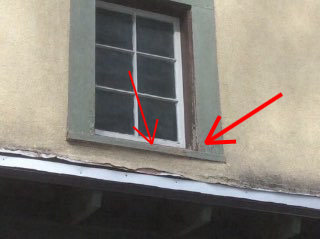
3) Noted several areas where trim needs to be repaired. This condition will allow water into and behind the siding which can lead to mold, rot and damages to interior finishes. This can also allow pest and wood destroying insects int the structure. Recommend having a qualified siding contractor make necessary repairs.
Photo 3-1
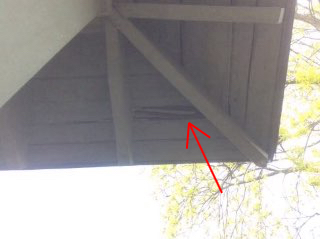
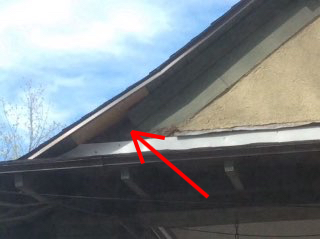
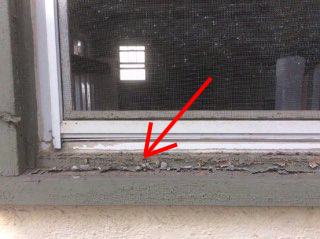
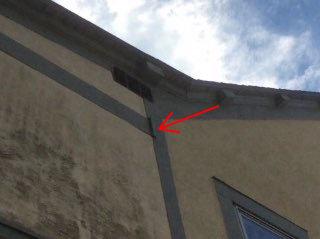
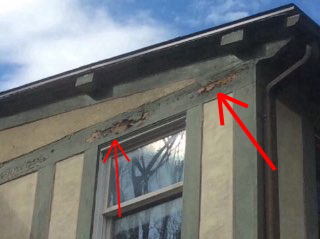
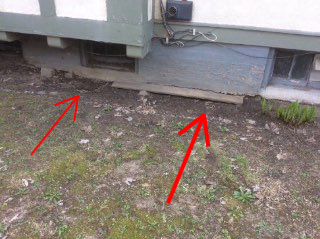
4) Wood trim shows signs of deterioration, requires repair and repainting.
Photo 4-1 Photo 4-2
Photo 4-3 Photo 4-4
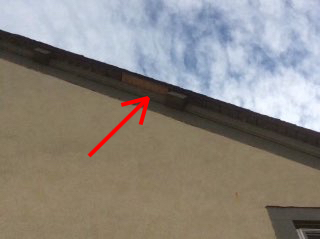
5) Noted a few small ares of exposed wood roof sheathing. Recommend painting these areas with high quality exterior grade enamel paint to seal the wood.
Grading beyond 6 feet of house: Slopes away from house
Driveway material: none noted
Walkway to front entry: concrete
Condition of walkway: Acceptable but has minor cracks or breaks
Fences: Wood
Fences felt: secure
Deck Location: Rear of house
Deck material: wood
Steps down to grade: Two steps to grade
Visibility under deck: Less than a foot and cant see.
Support column under deck: wood
Condition of the support columns: Acceptable
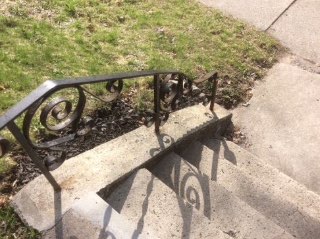
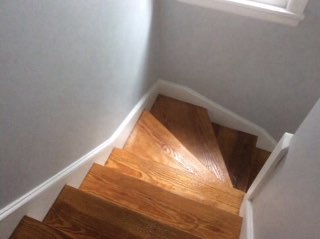
6) Handrails at one or more flights of stairs were too low or too high and pose a fall hazard. Handrails should be located at least 34 inches and at most 38 inches above the nose of each tread/riser. Recommend that a qualified person repair per standard building practices.
Photo 6-1
7) Noted both outlets on the back deck are not GFCI and one outlet is not wired properly. Recommend having a licensed electrician make necessary repairs.
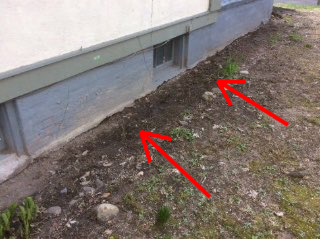
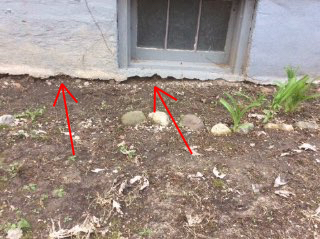
8) Perimeter grading slopes towards building. Recommend grading soil so it slopes down and away from the building to direct rainwater away.
Photo 8-1 Photo 8-2
Photo 8-3
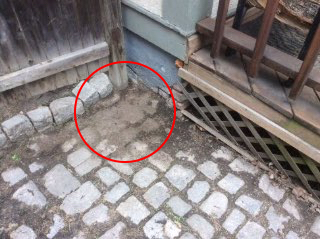
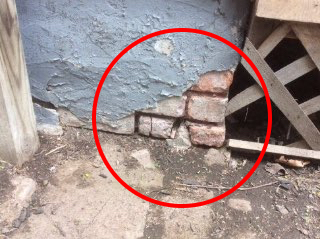
9) Noted deteriorated brick in an area where the grade slopes toward the house. This is due to freeze thaw action. Recommend re-grading the area so water runs away from the house. Also recommend repairing and repointing the brick. A mortar parge over the brick will help maintain the integrity of the brick.
Photo 9-1
10) Noted an area of deteriorated brick along an area of reverse sloping grade. The water is also making it's way into the basement in this area. The brick foundation needs to be repaired in this area and the grade needs to be re-worked so the water slopes away from the foundation Cost estimate: $1500
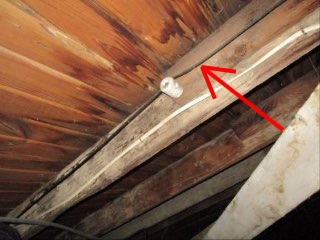
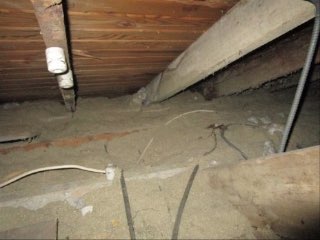
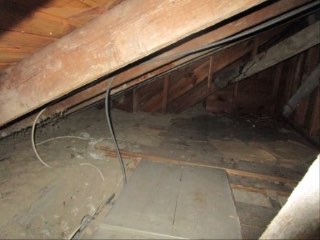
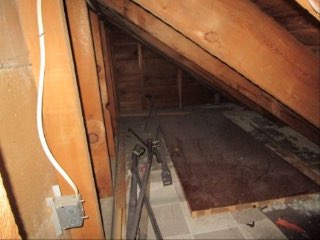
11) "Knob and tube" wiring or related components such as porcelain insulators were found. The wiring that was noticed int eh attic was found to be abandoned. This type of wiring was commonly installed prior to 1950. It is ungrounded, and considered unsafe by today's standards. Over time, the wire's insulation can become brittle and fall apart or wear thin, resulting in exposed conductors and a risk of shock and/or fire. This wiring is also easily damaged by covering it with insulation (a common practice), and incorrectly tapping new wiring into it.
The inspector did not find any energized knob and tube wiring during the inspection. However, this is no indication that all the knob and tube wiring has been abandoned. It is not within the scope of this inspection to determine what percentage of this property's wiring is of the knob-and-tube type, or to determine what percentage of the knob and tube wiring is energized versus abandoned. Recommend that a qualified electrician evaluate this wiring and make repairs or replace wiring as necessary.
Note that some insurance companies may be unwilling to offer homeowner's insurance for properties with knob and tube wiring. Consult with your insurance carrier regarding this. For more information, visit: https://www.reporthost.com/?KNOBTUBE
Photo 11-1
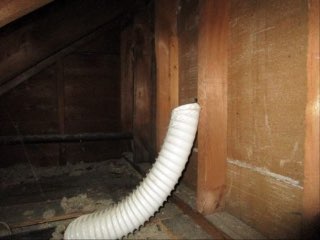
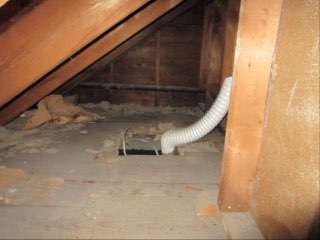
12) One or more exhaust fan ducts in the attic were not attached to a vent hood or cap. As a result, conditioned air will enter the attic when the fan is operated which can lead to mold on roof sheathing. Ducts terminating near an attic vent but without a dedicated vent hood or cap will likely blow conditioned air back into the attic. This can result in excessive moisture in the attic. Recommend that a qualified contractor repair per standard building practices, so exhaust fan ducts are permanently fastened to vent hoods or caps.
Photo 12-1
13) Noted bathroom exhaust duct is not insulated. Bathroom exhaust duct should be insulated with R-8 flex duct to the outside. Recommend replacing duct with insulated duct to prevent condensation inside the duct during winter months which can create a mold situation.
When bounced on: a normal amount of bounce was noted
Generally floors feel: Level
Mostly the doors are the following types: Wood
General door condition: Doors are generally in good condition
Windows were mostly observed to be: Double hung
Insulated noted in: Most
Appear made of: Wood, Vinyl
Random Tested: Yes
Skylights: Operable
Skylight leaks: none noted
Stairs: to basement, between living levels
Stairs condition: Good
Mostly walls appear to be made of: Drywall
18) The ungrounded and obsolete 2-prong outlets should be upgraded to include more modern and safer ones, which provide a pathway for the current to travel harmlessly to ground.
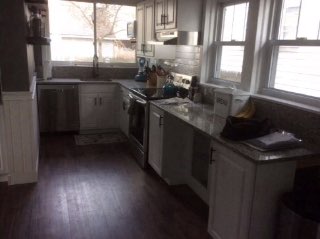
19) No ground fault circuit interrupter (GFCI) outlets installed in the kitchen. GFCI outlets help prevent electric shocks in areas that may have water present. Recommend having a licensed electrician install one or more GFCI outlets, especially over counter tops and around sinks.
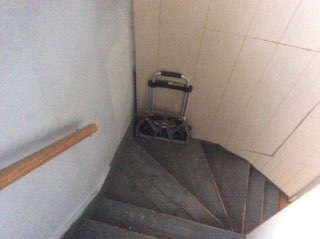
20) Handrails at one or more flights of stairs were missing. This is a potential fall hazard. Handrails should be installed at stairs with four or more risers or where stairs are greater than 30 inches high. Recommend that a qualified contractor install handrails where missing and per standard building practices.
Photo 20-1
21) Handrails at one or more flights of stairs were not continuous or did not extend the full length of the stairs. This is a potential fall hazard. Handrails should be continuous for the entire length of the stairs. Recommend that a qualified contractor replace or repair handrails per standard building practices.
Photo 21-1
22) One or more open ground outlets were noted in the front bedroom and in the back bedroom. Recommend having a licensed electrician establish a proper ground wire.front bedroom back bedroom
23) Noted one bedroom door was difficult to open or close. A qualified contractor should evaluate and repair or replace door(s) as necessary.
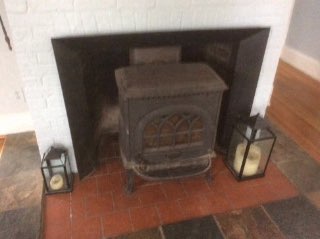
26) A significant amount of creosote (1/8" or more) visible in woodstove flue. Recommend cleaning, inspection and repairs if necessary by a qualified chimney service contractor.
27) All solid fuel burning appliances (woodstoves and fireplaces) should be inspected annually by a qualified chimney service contractor, cleaned and repaired as necessary. Recommend having chimney cleaned prior to first fire of this season.
Photo 27-1
28) Significant amounts of ashes, wood and/or debris are in the fireplace. The inspector was unable to fully evaluate it.
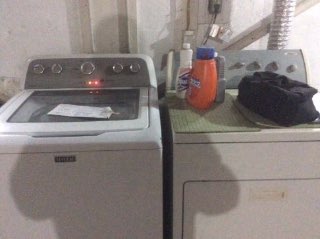
Observed: Connections for water and drain, Connections for electric
Operated: Advanced through cycles
Dryer: Whirlpool
Dryer age: Midlife
Vented to: Exterior
Power: Electric
Operated: Turned on and heated up
29) No ground fault circuit interrupter (GFCI) devices (outlets or circuit breakers) are visible for the kitchen. GFCI devices help prevent electric shocks in areas that may have water present. Recommend having a qualified, licensed electrician install GFCI protection for outlets, over counter tops and around sinks.
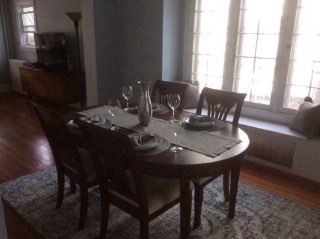
30) Noted a Hot neutral reversed outlet in the dining room. Recommend having a licensed electrician make necessary repairs.
Is there an abandoned oil tank on the property?: Unknown
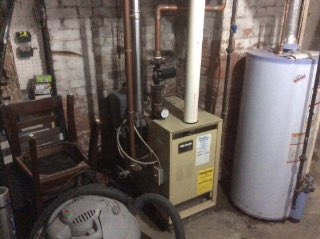
Combustion Air Supply: Exterior
When thermostats were turned on, the system: fired or gave heat
Automatic shut-off safety devices were noted: Attached to unit.
Flue pipes: Noted
Flue pipes: pitch up to chimney
Boiler safety relief valve: noted
safety extension: noted
Distribution system: Radiators
Heat distribution: In most rooms
33) Recommend that this system be serviced every two years in the future by a qualified heating and cooling technician.
Photo 33-1
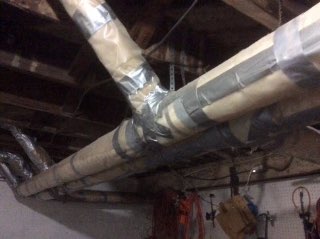
34) Noted insulation on heating pipes that appears to be asbestos. The insulation is in good condition and at this time does not pose a health risk. If an future remodeling requires the removal of the insulation it should be tested for asbestos prior to any work taking place and the results of the test shared with the contractor(s).
Tested hot water: Hot water was received at faucets
35) No gas supply shut-off valve is visible. Recommend having a qualified, licensed plumbing contractor install one. A shut-off valve allows the gas supply to the water heater to be turned off if the water heater needs repair or replacement.
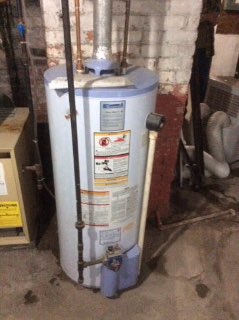
36) Hot water heater appears to be older than 10 years and is older than its estimated useful life. This hot water heater may need replacing at any time.
Photo 36-1
37) This unit is older than 5 years old and for better performance and a longer life this unit should be flushed out every other year because of sediment build up at bottom of unit. To flush a unit of sediment start by shutting off the water supply to the heater. Turn the temperature control to low and the on-off to "pilot". Connect a hose to the drain valve at the bottom and run the hose outside or to a drain. Drain the tank down and then open the water supply to force the sediment out. Close the drain, refill the tank, and reset the controls to normal.
38) "Knob and tube" wiring or related components such as porcelain insulators were found. This type of wiring was commonly installed prior to 1950. It is ungrounded, and considered unsafe by today's standards. Over time, the wire's insulation can become brittle and fall apart or wear thin, resulting in exposed conductors and a risk of shock and/or fire. This wiring is also easily damaged by covering it with insulation (a common practice), and incorrectly tapping new wiring into it.
The inspector did not find any energized knob and tube wiring during the inspection. However, this is no indication that all the knob and tube wiring has been abandoned. It is not within the scope of this inspection to determine what percentage of this property's wiring is of the knob-and-tube type, or to determine what percentage of the knob and tube wiring is energized versus abandoned. Recommend that a qualified electrician evaluate this wiring and make repairs or replace wiring as necessary.
Note that some insurance companies may be unwilling to offer homeowner's insurance for properties with knob and tube wiring. Consult with your insurance carrier regarding this. For more information, visit: https://www.reporthost.com/?KNOBTUBE
39) The ungrounded and obsolete 2-prong outlets should be upgraded to include more modern and safer ones, which provide a pathway for the current to travel harmlessly to ground.
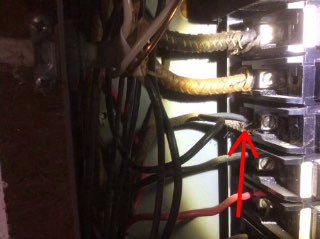
40) One or more circuit breakers are "double tapped", where 2 or more wires are clamped in a circuit breaker terminal and the circuit breaker was only designed for 1 wire. This is a safety hazard since wires may come loose and cause arcing, sparking and fires. Recommend having a licensed electrician evaluate and repair.
Photo 40-1
41) This home may have solid-strand branch circuit aluminum wiring. This type of aluminum wiring is a potential fire hazard. Problems due to expansion and contraction can cause overheating at connections between the wire and devices such as switches and outlets, or at splices. The Consumer Products Safety Commission recommends either discontinuing use of circuits with aluminum wiring, or pigtailing copper wiring onto the ends of the aluminum wire. Recommend consulting with one or more licensed electricians to determine the best course of action to correct this problem. For more information, visit: http://www.inspect-ny.com/aluminum.htm
With multiple fixtures running observed: Acceptable decrease in flow
Waste System Pipes: Cast Iron
House Trap: Not noted
Main waste line cleanouts: were not noted
Vent pipe observed on roof: Yes
43) Noted the water supply line from the city main is lead. Recommend calling the city water department to see if they plan on replacing the lead lines in the near future. Recommend that the water be run for 20-30 seconds before using it for drinking or cooking.
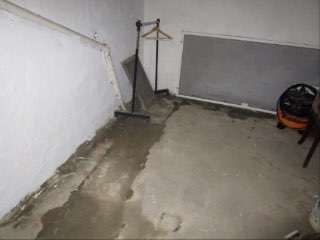
Observed on interior wall: water penetration, moisture damage
Basement floor: concrete
Water stains observed on: floor, walls
General area dampness: feels damp, smells damp
Ventilation: Windows
Pier or support post material: Brick
Support columns condition: appear intact
Floor drainage: Floor Drains
Sump pump: None noted
Floor structure above: Solid wood joists
Insulation material underneath floor above: Fiberglass roll or batt
Beam material: Solid wood
Windows: Wood
Chimney in basement: brick
Chimney condition: Good
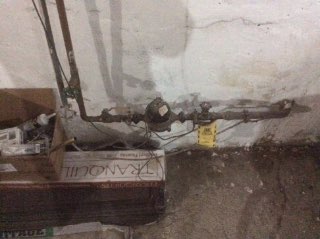
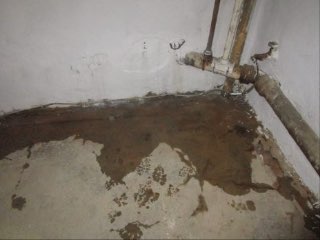
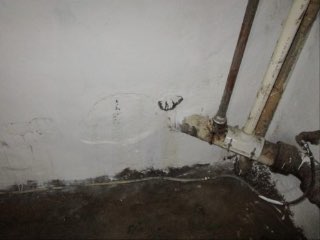
45) Noticed an area of active leaking in the basement. Water was running down the walls. This could be from ground water or the waste line behind the wall may be cracked. Recommend calling Roto Rooter or Apex Sewer to TV the line to determine the condition of the line. This should be done prior to closing. If the line is cracked the repairs could exceed $5000
Photo 45-1 Photo 45-2
Photo 45-3
46) Some beginning signs of moisture on foundation walls. Recommend regrading around the house to ensure water runs down and away from the house.
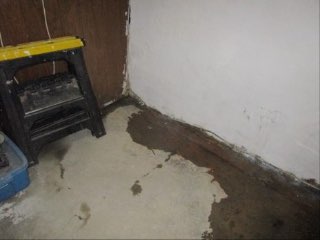
47) Water was also noted on the floor along the left side of the house. This is due to improperly pitched grade along the side. Recommend re-grading that side of the house so the water drain away from the foundation.
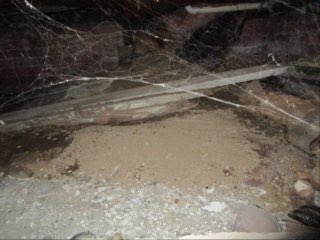
Limitations: Structural components such as joists and beams, and other components such as piping, wiring and/or ducting that are obscured by under-floor insulation are excluded from this inspection. The inspector does not determine if support posts, columns, beams, joists, studs, trusses, etc. are of adequate size, spanning or spacing. The inspector does not guarantee or warrant that water will not accumulate in the crawl spaces in the future. Complete access to all crawl space areas during all seasons and during prolonged periods of all types of weather conditions (e.g. heavy rain, melting snow) would be needed to do so.The inspector attempts to locate all crawl space access points and areas. Access points may be obscured or otherwise hidden by furnishings or stored items. In such cases, the client should ask the property owner where all access points are that are not described in this inspection, and have those areas inspected. Note that crawl space areas should be checked at least annually for water intrusion, plumbing leaks and pest activity.
Crawl space inspection method: Viewed from hatch(es)
Condition of floor substructure above crawl space: Good
Pier or support post material: Brick
Beam material: Not determined (inaccessible or obscured)
Floor structure: Solid wood joists
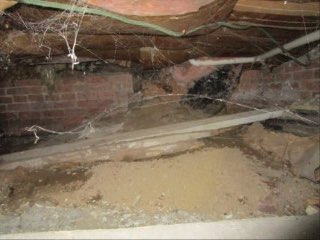
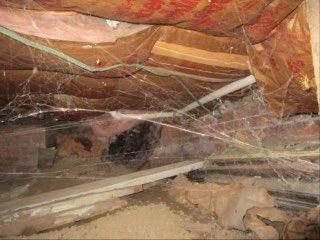
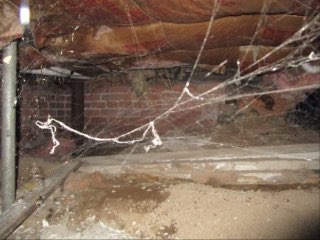
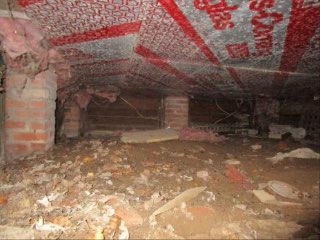
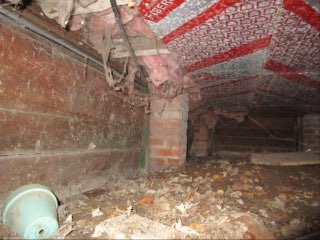
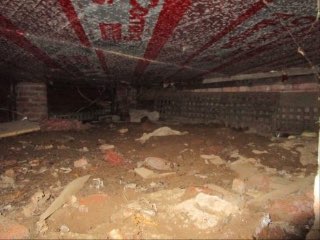
Condition of insulation underneath floor above: Required repairs, replacement and/or evaluation (see comments below)
Insulation material underneath floor above: Fiberglass roll or batt
Vapor barrier present: None visible
Condition of vapor barrier: Good
Condition of crawl space ventilation: Good
Ventilation type: with vents
48) Ventilation for the crawl space was substandard. There were too few vents. This can result in high levels of moisture in the crawl space and is a conducive condition for wood-destroying organisms. One square foot of vent area should be installed for 150 square feet of crawl space. Vents should be evenly distributed and within a few feet of corners to promote air circulation. Leaving the windows to the basement area would correct this.
49) Some sections of under-floor insulation above the crawl space have fallen down. This may result in reduced energy efficiency. Recommend that a qualified person install or replace insulation as necessary.
51) The ungrounded and obsolete 2-prong outlets should be upgraded to include more modern and safer ones, which provide a pathway for the current to travel harmlessly to ground.
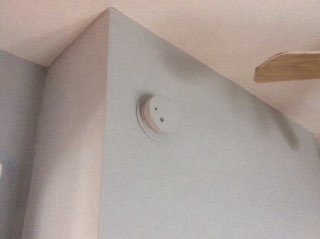
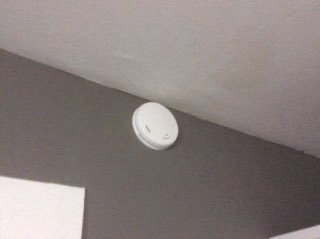
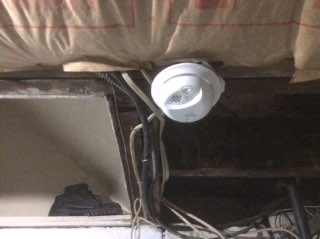
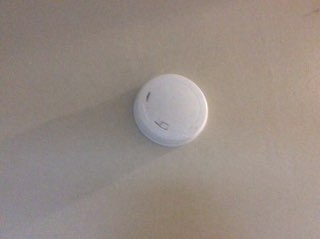
52) Recommend installing additional carbon monoxide detectors so one exists on each floor including the basement.
53) One or more open ground outlets. Recommend having a licensed electrician establish a proper ground wire.