This report published on Saturday, December 6, 2025 11:30:55 AM PST
This report is the exclusive property of this inspection company and the client(s) listed in the report title. Use of this report by any unauthorized persons is prohibited.
Concerns are shown and sorted according to these types:
Safety
Poses a risk of injury or death
Repair/Replace
Recommend repairing or replacing
Repair/Maintain
Recommend repair and/or maintenance
Maintain
Recommend ongoing maintenance
Evaluate
Recommend evaluation by a specialist
Comment
For your information
Damage
Damage caused by wood destroying insects or organisms (Rot, carpenter ant galleries, etc.)
Conducive conditions
Conditions conducive for wood destroying insects or organisms (Wood-soil contact, shrubs in contact with siding, roof or plumbing leaks, etc.)
Life Safety
2) Exit signs near emergency exits were missing. This is a potential safety hazard. A qualified person should repair, replace or modify exit signs as necessary, and per National Fire Protection Association (NFPA) 101 standards.
Exterior and Foundation
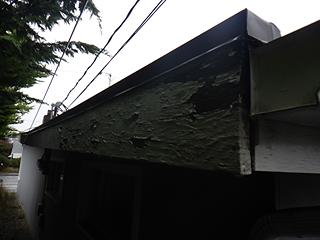
4) Deterioration was found at fascia. Recommend that a qualified contractor repair as necessary. All deteriorated wood should be replaced.
Photo 4-1
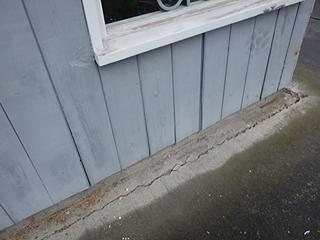
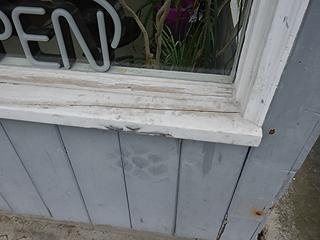
5) Some sections of siding were loose or cracked. Recommend that a qualified person repair or replace siding as necessary.
Photo 5-1 Photo 5-2
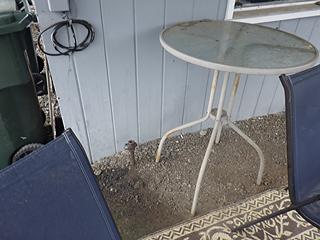
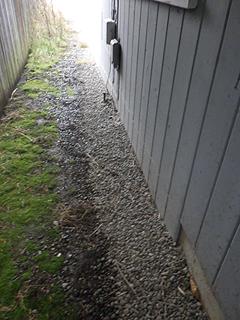
6) Soil (gravel) was in contact with or less than 6 inches from siding, trim or structural wood. This is a conducive condition for wood-destroying organisms. Recommend grading or removing soil as necessary to maintain a 6-inch clearance. Note that damage from fungal rot and/or insects may be discovered when soil is removed, and further repairs and wood replacement may be necessary.
Photo 6-1 Photo 6-2
Roof
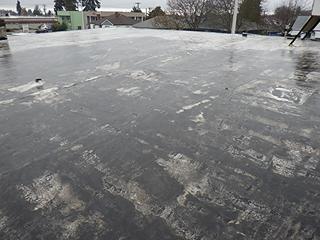
8) The roof surface was significantly deteriorated and appeared to be at or beyond its service life. It needs replacing now. This is a conducive condition for wood-destroying organisms. Consult with a qualified contractor to determine replacement options. Note that some structural repairs are often needed after old roof surfaces are removed and the structure becomes fully visible. Related roofing components such as flashings and vents should be replaced or installed as needed and per standard building practices. Per client, a bid has been received, and roofing will be replaced in the near future. Roof signage and chimney to be removed.
Photo 8-1
Attic and Roof Structure
9) Ceiling insulation or insulation at roof level was not observed. Client may wish to have a qualified contractor install insulation at time of reroofing for better energy efficiency and per standard building practices.
Electric
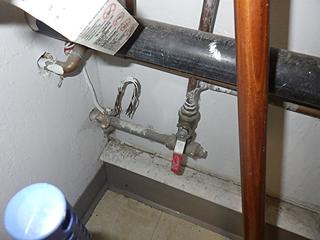
12) Plastic water supply pipes were installed, and the electric service appeared to rely on metal water supply pipes for a grounding electrode. The plastic pipes may have compromised the grounding system and may pose a safety hazard for shock. Recommend that a qualified electrician evaluate and repair if necessary.
Photo 12-1 Photo 12-2
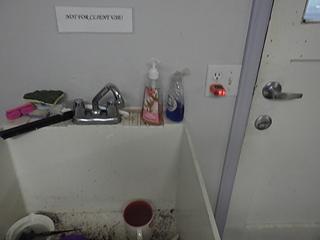
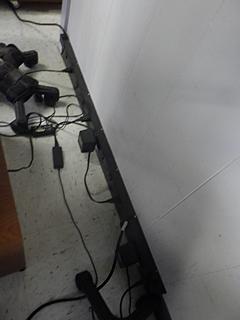
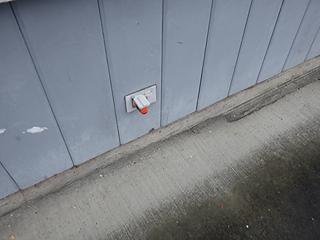
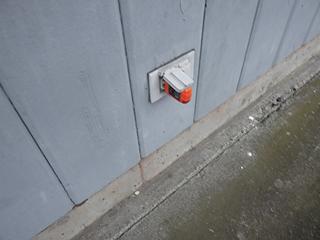
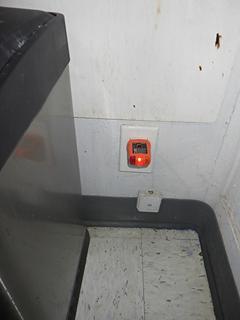
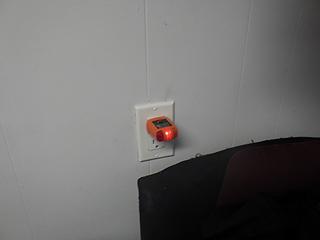
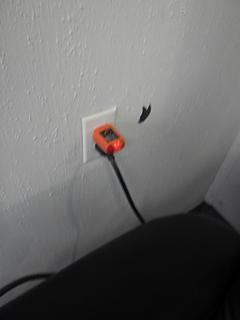
13) Electric receptacles at locations where required had no visible ground fault circuit interrupter (GFCI) protection, or the inspector was unable to determine if GFCI protection was present. If not GFCI-protected, receptacles in wet areas pose a shock hazard. Recommend that a qualified electrician evaluate and install GFCI protection if necessary and per standard building practices. General guidelines for GFCI-protected receptacles include the following locations:
Outdoors (since 1973)
Bathrooms (since 1975)
Garages (since 1978)
Kitchens (since 1987)
Crawl spaces and unfinished basements (since 1990)
Wet bar sinks (since 1993)
Laundry and utility sinks (since 2005)
Photo 13-1 Photo 13-2
Photo 13-3 Photo 13-4
14) No carbon monoxide detectors were found on the property. This is a potential safety hazard. Modern standards call for placement of CO detectors on every habitable level and in every HVAC zone of buildings. CO detectors must be distinct from fire alarms and other devices. CO detectors are typically integrated with central fire alarm systems where installed. A qualified contractor should evaluate and install CO detectors per standard building practices. Existing detectors may detect CO, but could not be verified.
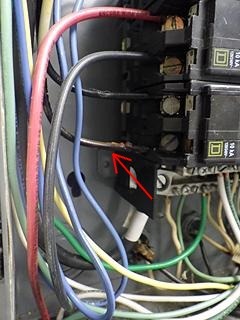
15) A wire showed signs of over-heating. A qualified electrician should evaluate and make repairs or replace components as necessary.
Photo 15-1 Subpanel
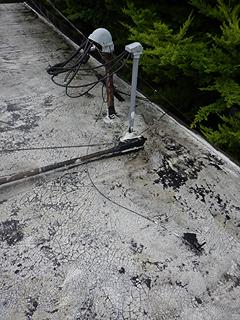
16) The service mast extended above the roof surface and the guy wires were substandard. This is a potential shock hazard. Recommend that a qualified electrician repair per standard building practices.
Photo 16-1
17) Several ground fault circuit interrupter (GFCI) type receptacles had an open ground. Open ground GFCI receptacles will trip, but they won't provide a grounded electric supply for appliances that need them. This is a potential shock hazard. Client may wish to have a qualified electrician upgrade wiring per standard building practices.
Photo 17-1 Photo 17-2
Photo 17-3
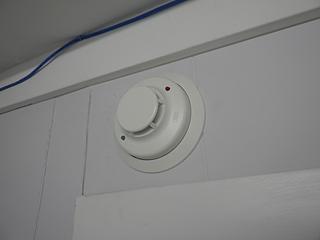
18) Smoke detectors were found in buildings. However requirements for smoke detectors vary by occupancy type and in some cases by municipality. It is beyond the scope of this inspection to determine all required locations for smoke detectors. A qualified contractor should evaluate buildings on this property and install and/or replace smoke detectors per standard building practices. Smoke detectors are typically integrated with fire alarm systems where installed.
Photo 18-1
Plumbing / Fuel Systems
19) The inspector was unable to locate the main sewer clean-out, and unable to verify that one exists. Such clean-outs can help determine if the main line versus a fixture drain line is clogged, and make clearing out the sewer line easier and less expensive. Without a main sewer clean-out, a plumber's drain clearing machine will need to be run through an internal fixture (e.g. a toilet) or through a vent pipe typically located on the roof. Consult with the property owner, or have a qualified plumber evaluate if necessary, to determine if a clean-out exists. If one is not installed, then recommend that a qualified plumber install one per standard building practices.
20) Per client, some drain pipes have a substandard slope. Clogging or leaks can occur as a result. Drain and waste pipes should be sloped 1/4 inch per foot of length if less than 3 inches in diameter, or 1/8 inch per foot of length for larger diameters. At this point, client needs to snake said pipes periodically. Client may wish to consult with a qualified electrician to determine if other alternatives exist.
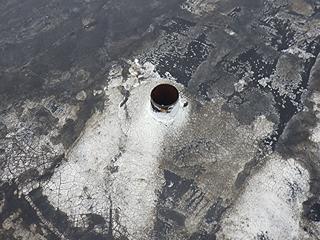
21) A plumbing vent pipe terminated less than 6 inches above the roof surface below. Debris and/or snow can block vent pipe openings with such short pipes. Blocked vent pipes can cause sewer gases to enter living spaces. Recommend that a qualified person repair by extending pipe to terminate at least 8 inches above the roof surface.
Photo 21-1
Heating, Ventilation and Air Condition (HVAC)
23) The last service date of the forced air heating/cooling system appeared to be more than 1 year ago, or the inspector was unable to determine the last service date. Ask the property owner when it was last serviced. If unable to determine the last service date, or if this system was serviced more than 1 year ago, recommend that a qualified HVAC contractor service this system and make repairs if necessary. Because this system has a compressor and refrigerant system, this servicing should be performed annually in the future. Any needed repairs noted in this report should be brought to the attention of the contractor when it's serviced.
Restrooms, Bathrooms, Laundry and Sinks
25) The clothes dryer was equipped with a vinyl or mylar, accordion-type, flexible exhaust duct. The U.S. Consumer Product Safety Commission considers these types of ducts to be unsafe, and a fire hazard. They can trap lint and are susceptible to kinks or crushing, which can greatly reduce the air flow and cause overheating. Recommend that such ducts be replaced with a rigid or corrugated semi-rigid metal duct, and by a qualified contractor if necessary.
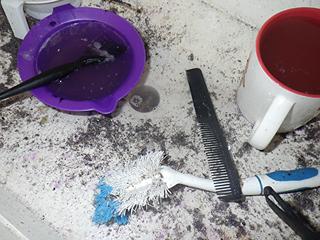
26) A sink drained slowly. Recommend clearing drain and/or having a qualified plumber repair if necessary.
Photo 26-1
Offices, Interior, Doors and Windows
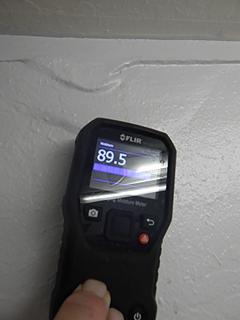
27) Stains and elevated levels of moisture were found ceiling/wall areas. One wall area appears to be an active leak. Recommend that a qualified contractor evaluate and repair as necessary.
Photo 27-1
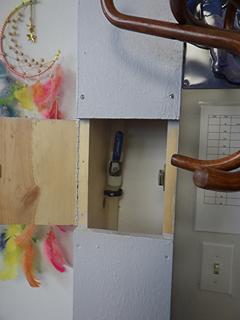
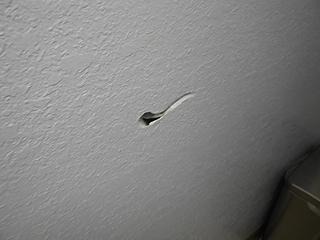
28) There was a hole in a wall. Recommend that a qualified person repair as necessary.



 Exit signs near emergency exits were missing. This is a potential safety hazard. A qualified person should repair, replace or modify exit signs as necessary, and per National Fire Protection Association (NFPA) 101 standards.

 Plastic water supply pipes were installed, and the electric service appeared to rely on metal water supply pipes for a grounding electrode. The plastic pipes may have compromised the grounding system and may pose a safety hazard for shock. Recommend that a qualified electrician evaluate and repair if necessary.