This report published on Sunday, October 14, 2018 11:47:02 AM EDT
INTRODUCTION to the Home Inspection Report. It is IMPORTANT to read this Introduction, as well as all other items in this report.
This report is the exclusive property of this inspection company and the client(s) listed in the report title. Use of this report by any unauthorized persons is prohibited.
Except as otherwise required by law, the home inspector shall not deliver a home inspection report to any person other than the client(s) of the home inspector without the client's consent. If this inspection is part of a real estate transaction, and not being done specifically for the seller, the seller shall have the right, upon request, to receive without charge, a copy of the home inspection report from the person for whom it was prepared.
The Home Inspection is conducted within the Scope of the Standards of Practice of the National Association of Certified Home Inspectors.
Definition and Scope from the Standards of Practice
"A Home Inspection is a non-invasive visual examination of a residential dwelling, performed for a fee, which is designed to identify material defects within specific components of said dwelling. Components may include any combination of mechanical, structural, electrical, plumbing, or other essential systems or portions of the home, as identified and agreed to by the Client and Inspector, prior to or during the inspection process.
A Home Inspection is intended to assist in evaluation of the overall condition of the dwelling. The inspection is based on observation of the visible and apparent condition of the structure and its components on the date of the inspection and not the determination of future conditions.
A home inspection will not reveal every problem that exists or ever could exist, but only those material defects observed on the day of inspection.
A Material defect is a problem with a residential real property or any portion of it that would have significant adverse impact on the value of the property or that involves an unreasonable risk to people on the property. The fact that a structural element, system or subsystem is near, at or beyond the end of the normal useful life of such a structural element, system or subsystem is not by itself a material defect."
In addition to reporting on Material Defects within the Scope of the Standards of Practice, the inspector may also, at his discretion, discuss and/or report on "minor defects" and/or "maintenance issues" for the added benefit of the client(s). This information is for the sole benefit of the client('s) understanding of the overall condition of the home and is outside of the Scope of the Inspection.
The results of this home inspection are not intended to make any representation regarding the presence or absence of latent or concealed defects that are not reasonably ascertainable in a competently performed home inspection. No warranty or guaranty is expressed or implied.
The Home Inspector conducting your home inspection is not a licensed structural engineer, nor is he licensed in such specialty areas as electrical, HVAC, etc. When conditions warrant it, the home inspector may advise to seek a professional opinion by the appropriate licensed/qualified professional, to address specific defects, suspected defects or concerns mentioned in the report.
This home inspection report is not to be construed as an appraisal and may not be used as such for any purpose.
How to Read this Report
This report is organized by the property's functional areas. Within each functional area, descriptive information is listed first and is shown in bold type. Items of concern follow descriptive information.
Concerns are shown and sorted according to these types:
Safety
Poses a risk of injury or death
Repair/Replace
Recommend repairing or replacing
Repair/Maintain
Recommend repair and/or maintenance
Maintain
Recommend ongoing maintenance
Evaluate
Recommend evaluation by a specialist
Serviceable
Item or component is in serviceable condition
Comment
For your information
Click here for a glossary of building construction terms.Contact your inspector If there are terms that you do not understand, or visit the glossary of construction terms at https://www.reporthost.com/glossary.asp
The following items are excluded from this inspection: Private sewage disposal system, Swimming pool, Hot tub, Private well, Water filtration system, Water softener system
1) A portion of the deck is unstable in due to lack of diagonal bracing. This is a safety hazard since severe movement may cause the deck to collapse. Recommend that a qualified contractor evaluate and make repairs as necessary.
Photo 1-1
2) Gaps larger than four inches were found in the deck/carport guardrails. This is a safety hazard, especially for small children. Recommend that a qualified contractor make modifications as necessary so gaps in guardrails do not exceed four inches. For example, installing additional balusters or railing components.
Photo 2-1
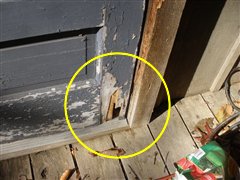
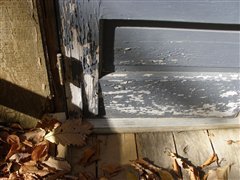
3) There is deterioration at the bottom of two wood doors. Recommend that a qualified contractor repair/replace doors as necessary.
Photo 3-1
Photo 3-2
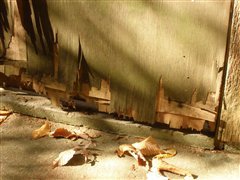
4) There is a gap in at least one area of the siding that will allow water intrusion. Recommend that a qualified contractor repair as necessary.
Photo 4-1
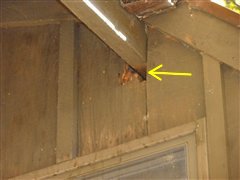
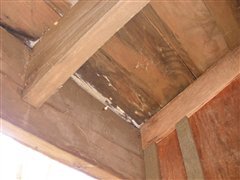
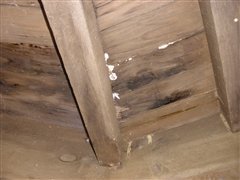
5) There are stains and some slight deterioration on the bottom of eaves that indicate some roof leaks. See Comments in Roof Section.
After shingles are replaced, recommend repairing/restaining eaves as necessary.
Photo 5-1
Photo 5-2
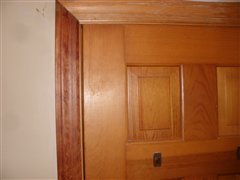
6) Paint is deteriorated in some areas, such as on wood door. Recommend that areas be repainted as necessary.
Photo 6-1
7) With the exception of the noted concerns, overall the Exterior appeared to be in satisfactory condition.
Roof covering: Asphalt or fiberglass composition shingles
Estimated age of roof: 28
Gutter & downspout material: Aluminum
Roof ventilation: Adequate
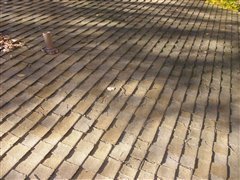
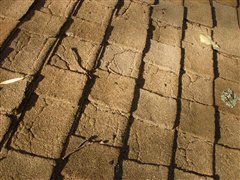
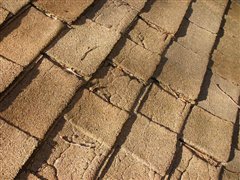
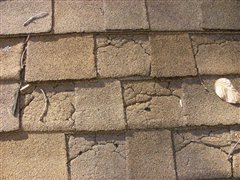
8) The shingles are deteriorated and appear to be at the end of their service life and should be replaced in the near future. Recommend that the clients consult with a qualified roofing contractor to determine replacement options and costs and replace roof as soon as possible.
Photo 8-1
Photo 8-2
Photo 8-3
Photo 8-4
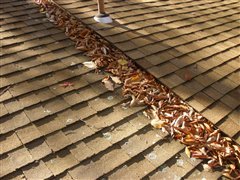
9) Debris such as leaves has accumulated on the roof in some areas. This is a conducive condition for wood destroying insects and organisms since water may not flow easily off the roof, and may enter gaps in the roof surface. Leaks may occur as a result. Debris should be cleaned from the roof now and as necessary in the future.
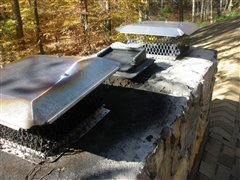
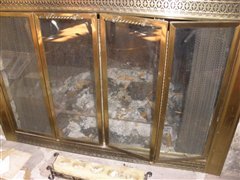
10) All solid fuel burning appliances (wood stoves and fireplaces, etc.), as well as their chimneys, should be inspected annually by a qualified chimney service contractor, cleaned and repaired as necessary.
Recommend that this service be performed prior to using the fireplace or stove.
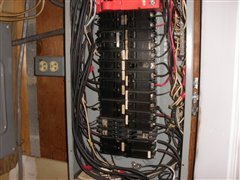
Primary service overload protection type: Circuit breakers
Service amperage (amps): 200
Service voltage (volts): 120/240
Location of main service switch: Basement
Location of main disconnect: Breaker at top of main service panel
Service entrance conductor material: Aluminum
System ground: Ground rod(s) in soil
Main disconnect rating (amps): 200
Branch circuit wiring type: Non-metallic sheathed
Smoke detectors present: Yes
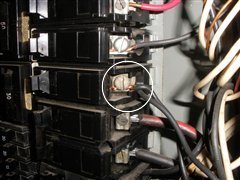
11) One or more circuit breakers are "double tapped", where 2 or more wires are clamped in a terminal designed for only one wire. This is a safety hazard since the bolt or screw may tighten securely against one wire, but leave others loose. Arcing, sparks and fires may result. Recommend that a qualified electrician repair as necessary.
Photo 11-1
12) With the exception of the noted concern, overall the electric service appeared to be in satisfactory condition.
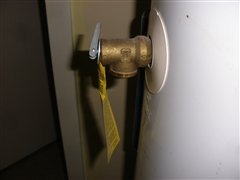
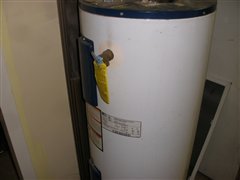
13) No drain line is installed for the temperature-pressure relief valve. This is a potential safety hazard due to the risk of scalding if someone is standing next to the water heater when the valve opens. Recommend that a qualified plumber install a drain line as per standard building practices, typically extending to within 6 inches of floor. For more information, visit http://www.wattsreg.com/default.htm?/t&p/installation.htm
Photo 13-1
14) The water heater operated as intended at time of inspection.
15) The estimated useful life for most water heaters is 8 to 12 years. This water heater appears to be older than this and may need replacing at any time. Recommend budgeting for a replacement in the near future.
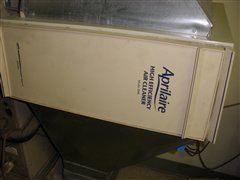
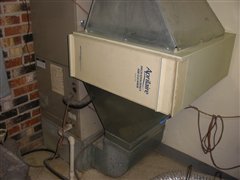
16) The filter(s) for the heating/cooling system should be checked monthly and replaced or washed as necessary.
Photo 16-1
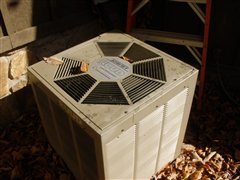
17) The heating and cooling system appeared to operate as intended at time of inspection.
Photo 17-1
18) The estimated useful life for heat pumps is 15 to 20 years. This heat pump appears to be older than this and may need replacing at any time. Recommend budgeting for a replacement in the near future.
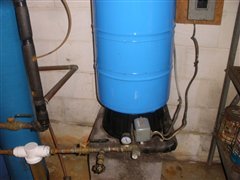
Location of main water shut-off valve: At well pressure tank or at well pump breaker
Water service: Private
Supply pipe material: Copper
Vent pipe material: Plastic
Drain pipe material: Plastic
Waste pipe material: Plastic
19) Water supply pipes in homes built prior to 1986 may be joined with solder that contains lead. Lead is a known health hazard, especially for children. Laws were passed in 1985 prohibiting the use of lead in solder, but prior to that solder normally contained about 50 percent lead. The client should be aware of this, especially if children will be living in this structure. Evaluating for the presence of lead in this structure is not included in this inspection. Recommend that the client consider having a qualified lab test for lead, and if necessary take steps to reduce or remove lead from the water supply. Various solutions such as these may be advised:
Flush water taps or faucets. Do not drink water that has been sitting in the plumbing lines for more than six hours.
Install appropriate filters at points of use.
Use only cold water for cooking and drinking. Hot water dissolves lead more quickly than cold water.
Use bottled or distilled water.
Treat well water to make it less corrosive.
Have a qualified plumbing contractor replace supply pipes and/or plumbing components as necessary.
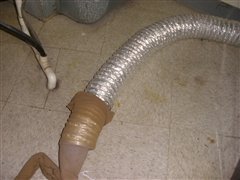
20) The clothes dryer exhaust is not vented to the exterior. Clothes dryers produce large amounts of moisture which should not enter structure interiors. Damage to building components may result. Recommend that a rigid or semi-rigid metal exhaust duct be installed and vented to the exterior, as per standard building practices, and by a qualified contractor if necessary. For information, visit http://www.cpsc.gov/CPSCPUB/PUBS/5022.html
Photo 20-1
21) Overall, visible plumbing appeared to be in satisfactory condition and the clothes washer and dryer operated as intended.
Insulation material underneath floor above: Fiberglass roll or batt
Pier or support post material: Steel
Beam material: Laminated wood
Floor structure above: Solid wood joists
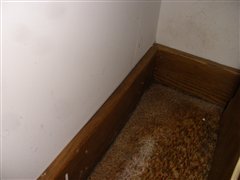
22) There was an area in the corner of the basement that was moist. Moisture is a conducive condition for wood destroying insects and other organisms, such as mold, and should not be present in the basement.
It appeared to be in an area where the well pipe enters the basement and it may be that moisture is leaking in around the pipe from the ground where it penetrates the block wall. The wall is finished, however, and the pipe cannot be seen.
Recommend that a qualified contractor evaluate, such as remove drywall to inspect pipe entrance, and repair as necessary.
Photo 22-1
23) With the exception of the noted concern, overall, the basement appeared to be dry at the time of inspection and generally in satisfactory condition.
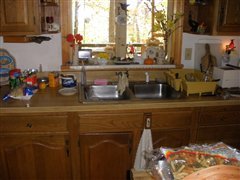
24) One or more electric receptacles near the sink appear to have no ground fault circuit interrupter (GFCI) protection. This is a safety hazard due to the risk of shock. Although perhaps not a requirement at time of construction, for enhanced safety, recommend that a qualified electrician make repairs so that all receptacles near sinks have GFCI protection. For example, install GFCI receptacles or circuit breaker(s) as needed.
Photo 24-1
25) The sink and appliances appeared to operate as intended at time of inspection. Overall, the kitchen appeared to be in satisfactory condition.
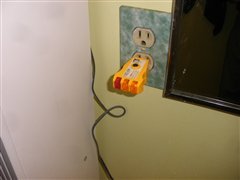
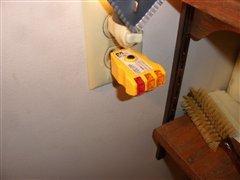
26) Electric receptacles near the sinks appear to have no ground fault circuit interrupter (GFCI) protection. This is a safety hazard due to the risk of shock. Although perhaps not a requirement at time of construction, for enhanced safety, recommend that a qualified electrician make repairs so that all receptacles near sinks have GFCI protection. For example, install GFCI receptacles or circuit breaker(s) as needed.
Photo 26-1
Photo 26-2
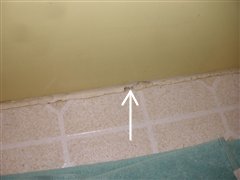
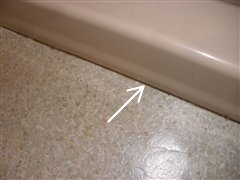
27) Caulk is missing or deteriorated along the base of the tub and shower, where flooring meets the unit. Recommend that caulk be replaced where deteriorated and/or applied where missing to prevent water intrusion and damage to the floor structure.
Photo 27-1
Photo 27-2
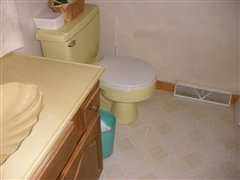
28) Toilets, sinks, tub/showers operated as intended at time of inspection.
Functional water flow appeared to be satisfactory.
29) Although smoke alarms are present, an insufficient number of smoke alarms are installed according to the latest recommendations of the Consumer Products Safety Commission. Recommend that additional smoke alarms be installed as necessary so a functioning one exists in each bedroom as well as in each hallway leading to bedrooms. For more information, visit http://www.cpsc.gov/cpscpub/pubs/5077.html
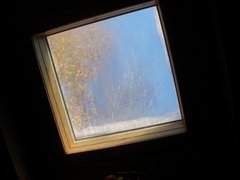
30) Seals between double-pane glass in a skylight appears to have failed based on condensation or stains between the panes of glass. Recommend that a qualified contractor evaluate and replace glass where necessary.
The client(s) should be aware that evidence of broken seals may be more or less visible from one day to the next depending on the temperature, humidity, sunlight, etc. Windows or glass doors other than those that the inspector identified may also have failed seals and need glass replaced too.
Photo 30-1
31) One of the doors does not close properly. Recommend that a qualified contractor evaluate and make repairs as necessary so that door closes as intended.
Photo 31-1
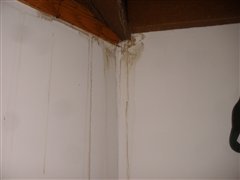
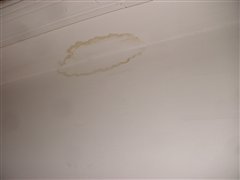
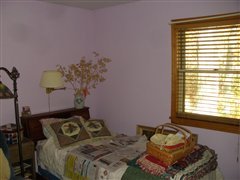
32) There are some stains on the ceiling/wall that seem to indicate roof leaks. See Comments in Roof Section and re-paint after shingles are replaced.
Photo 32-1
Photo 32-2
33) With the exception of the noted concerns, overall the interior of the home appeared to be in satisfactory condition.
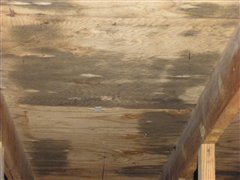
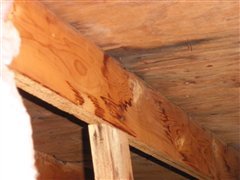
34) Several areas of the roof structure had stains and/or had elevated levels of moisture at the time of the inspection. There appears to be an active leak in the roof or structure exterior.
See Comments in Roof Section.
Photo 34-1
Photo 34-2
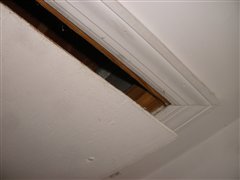
35) Pull-down stairs are installed for the attic access. No insulation is installed above the stairs and no weatherstripping is installed around the hatch perimeter. To reduce air leakage, recommend installing weatherstripping and an insulated hatch cover. An example of one can be seen at http://www.batticdoor.com/.
Interior air leaking into the attic results in heating and cooling losses, increased energy costs, and a possible increase in moisture levels in the attic due condensation forming on the underside of the roof sheathing during cold weather.
Photo 35-1
36) With the exception of the noted concerns, overall, the attic and roof structure appeared to be in satisfactory condition.
Photo 36-1
If you have any questions or concerns about your report, please contact Mark as soon as possible. Thank You for choosing Peace of Mind Home Inspections.